Welcome to WordPress! This is your first post. Edit or delete it to take the first step in your blogging journey.
-
I’m always on the hunt for a new music bio. With the large amount of these books being published today, one would think the line of great books in waiting is a long one, but that’s not always the case. This group represents a lucky period where books were practically falling off the shelves, and since then, I’ve read quite a few more.
The book that stands out for me and that I would like to own is Seymour Stein’s (2018). Great story, beautiful typography, great storyteller. But I loved all of them. The Doobies could have used a bit more grit, Geezer trailed off into journeyman metal land, and the music in Kid Congo Powers orbit is not always my style. Usually, it helps if you love the music that you’re reading about, but Mark Rivera managed to write a great book about playing with Billy Joel. Kudos to that! But the stories were all interesting and well-told.
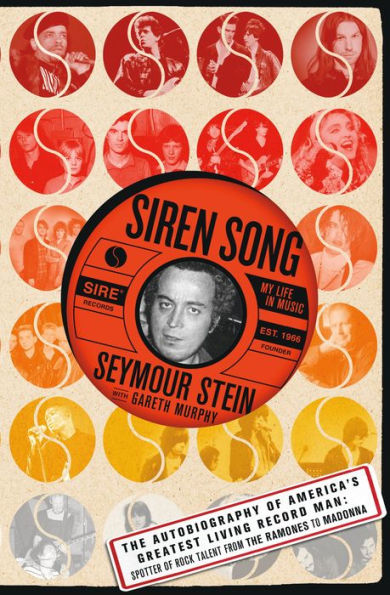
Seymour Stein – Siren Song: My Life In Music
There was a time when I wanted to get a job in the record industry. I tried and tried, and only ended up with a writing gig, editing music fan magazines for a small publisher. That was one of the most fun jobs that I ever had but anyone who wants to make a real go as a record person should read Seymour Stein’s autobiography.
It’s a bit unfair to write a short review of the autobiography of a man who affected many more musicians’ lives and therefore potentially many more fans’ lives than the typical muso bio. Sire Records was once the top indie record label in the world, to the point that it wasn’t an indie. Talking Heads, Ramones, The Smiths and OK, here goes the indie tag out the window, Madonna all recorded for Sire, plus many more. The coolness factor was off the hook.
Stein deals honestly with his eventual realization that he was gay, how this affected his marriage and the unfortunate sad ending for his former wife and best friend. The balance between work, music and personal issues is balanced like a fine wine. I plan to revisit this book someday.
Mark Rivera – Side Man: In Pursuit of the Next Gig
Mark Rivera’s excellent memoir is written in a conversational, open style, and you can tell before too long that he’s not pulling any punches. He drops F-Bombs, talks about his disappointment in having to drive a lame second car (as opposed to the fleets of dazzling specimens owned by his employers) and generally lays it on the line.
Anyone thinking seriously about a career as a musician could benefit from reading this absorbing and not overlong book. Rivera was Billy Joel’s main sax player for many years, and he was touring musician and session man for Foreigner during their heyday. But he didn’t bank the major royalties that those acts did, and he had to struggle at times. When you tour with Foreigner, you end up living the lifestyle, and that costs major ducats, he explains. At the tours’ end, you go looking for another gig because your accounts are exhausted, possibly as much as you are.
The ever-present question is, how does someone with so much talent, know-how, determination, and movie star good looks, to boot, end up with the short end of the stick? It turns out to be a complex answer that encompasses instrumentation in rock (the popularity of the sax comes and goes), race (many rock bands are comprised of not just white men, but white men who look somewhat like each other) and some kind of difficult to explain X-Factor. While I was reading the enjoyable early part including Mark’s childhood and love for his parents, his music experiences in NYC reminded me of Nile Rodger’s also terrific bio. But although they came up through somewhat similar circumstances, Nile Rodgers was a very distinctive guitarist and a music producer to the superstars (David Bowie and Madonna, to name just two), in addition to being an excellent songwriter. It’s a tough business. But Mark’s book is an easy to read, page turner.
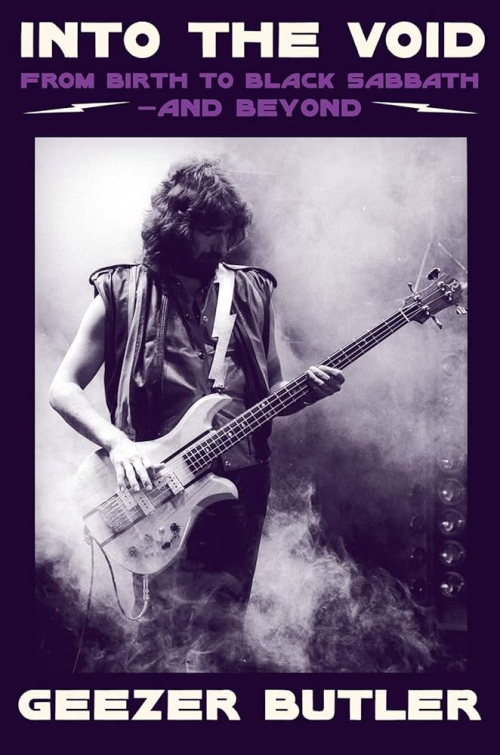
Geezer Butler: Into The Void: From Birth To Black Sabbath – And Beyond
Sadly, I never saw Black Sabbath play live. But as a kid growing up in the ‘70s, I did see them on Don Kirshner’s Rock Concert, the TV show that turned many young fans onto the music of the day. I was impressed and intrigued by Geezer’s aggressive right-hand technique. He also looked very cool. Later, when I learned that he had written a large portion of Black Sabbath’s lyrics, I was even more impressed.
Geezer’s book is a must for any fan, but as is the case with many rock bios, the beginning is the most interesting part. Geezer’s description of his childhood, growing up in England, post WWII, is very well written and explains much of how the band came to sound like they did. In fact, there’s a finely wrought aspect to his prose that hints at his lyrical abilities without drawing attention to itself.
Later, he spends a little too much time on the hijinks and whatnot of life on the road. Tony Iommi does so in his book and if my memory serves me right, so does Ozzy. But that says something, too. These guys are cut from the same cloth, and there’s a reason why so many of the bands of this era have such a uniform look, style and sound.
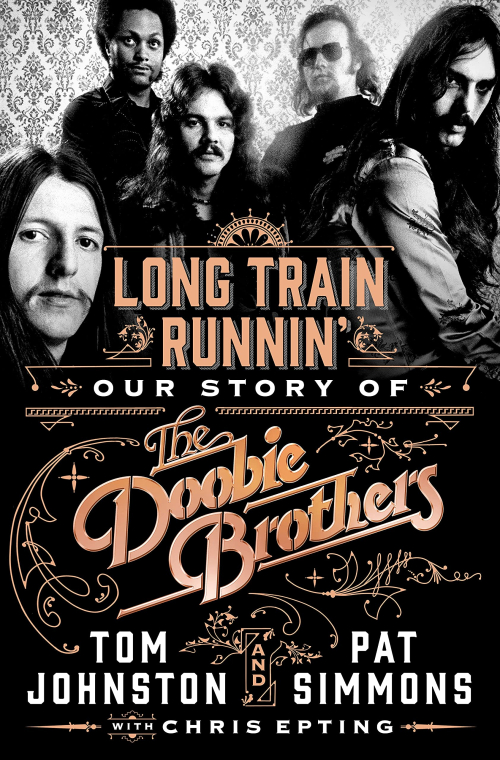
The Doobie Brother – Long Train Runnin’ – Our Story of The Doobie Brothers
By Tom Johnston and Pat Simmons with Chris Epting
A full Marshall Stack. A white Fender Stratocaster. An MXR Phase 90. Onstage at my junior high school. During recess. A kid just barely playing, sitting on the floor of the stage of the school auditorium. But what did he play? “Long Train Runnin’” by The Doobie Brothers, that’s what he played.
Tom Johnston and Pat Simmons spend a lot of time on their childhoods in the first part of the book. Their early years were very similar, and you keep expecting them to meet up in high school or soon after. They both got kicked out of the Fillmore West, on separate occasions, for Christ sakes! But in reality, they met in early adulthood, when both had already decided to try and become professional musicians. The book follows the typical trajectory of many of these types of books. The early excitement, the delirious early to middle success, and then the long, slow struggle to remain relevant and continue to play their music at the highest level.
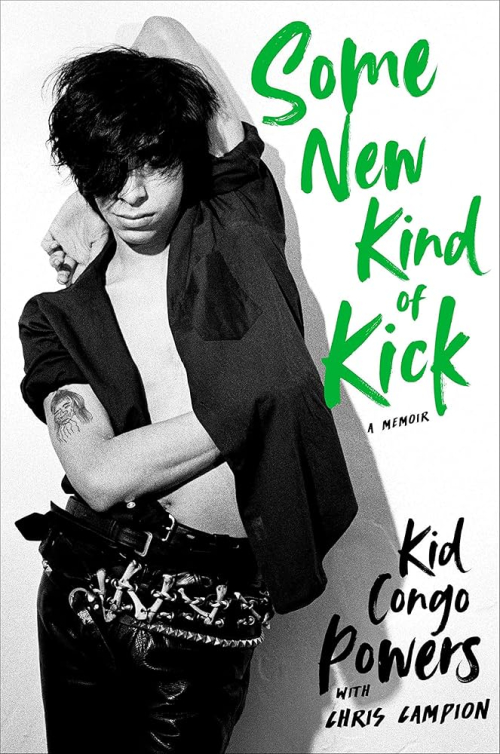
Kid Congo Powers: Some New Kind of Kick
If I hadn’t had seen Kid Congo Powers play with his band, Congo Norvell, at a small club in the ‘90s, I might never have picked this book up. But a glance at the ‘sex-drugs-and rock and roll’ storytelling on the inside quickly sealed the deal. I was surprised to learn that KPC didn’t pick up a guitar until about age twenty, about as old as you can possibly start and have a pro music career.
With stints in Gun Club, The Cramps, and Nick Cave and The Bads Seeds, this begs the question, “how does he do it?” A glance at the dust jacket blurbs hints at some of the qualities KCP possesses. From Flea to Nick Cave to Jack White, they all feel that KCP is one very cool guy. A quote from him later in the book helped explain it. Speaking of Jeffrey Lee Pierce, his partner in crime in Gun Club, KCP opined, “Everyone hated when Jeffrey played the trumpet, with a passion. I didn’t hate it so much. It was obvious he couldn’t play. I embraced it and was amused by it.” This is an attitude that will take you far in the world of Alt-Rock, where experimentation is held at a premium. It also demonstrates a tolerant and empathetic personality, good for playing in bands.
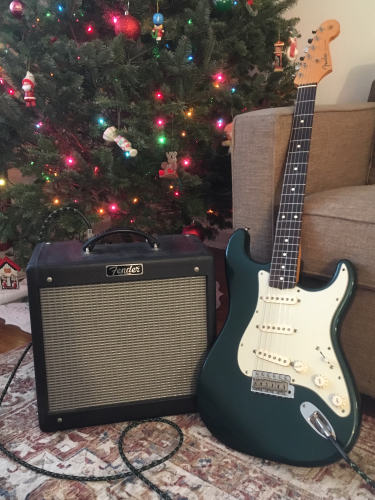
What kind of guitar did KCP play at that long ago gig at Brownie’s on Avenue A? It was one of the early Fender Squires, a Stratocaster, through a Fender Prosonic, if I remember correctly. Not exactly the rig of a punk-rocker. He sounded great. -Christian Botta
-
Years ago, I bought a Fender Made in Mexico Strat with the intention of creating a “stealth guitar” or “secret weapon.” The idea was, I would have this cool looking guitar that hardly cost anything and sounded great. It was an Olympic White Strat with a rosewood fretboard (one of my favorite styles) and I put a set of AY Custom Shop ‘69s in there. Indeed, it sounded good.
Well, the guitar didn’t really feel all that good to play and I started looking around for a better Strat. My black American Standard was long gone (See article: A Tale Of Six Strats). I tried a ton of them! Hard to estimate, but it was definitely over fifty and less than two hundred. I even went out to Mandolin Brothers on Staten Island where I saw the Gibson Les Paul Custom of my dreams and some stiff, expensive Custom Shop Strats, too. They sounded good but…
As luck would have it, they had about ten or fifteen 62 Reissue Strats (I wanted a rosewood board) at Matt Umanov at the time (early oughts) and I tried them all. I kept coming back to one of them, in forest green metallic. It sounded fantastic unplugged and just fine through an amp. Great neck. Trouble was, it was green, and I was trying to avoid green at the time. I love green and consequently, I had so much green stuff. But not The green stuff.
A few years before, I worked a guitar show for the shop where I was employed, and I played the genuine article, a sweet ’62 Forest Green Metallic Stratocaster in mint condition, at around $14,000. It stuck in my mind so much that I had a dream about it while I was trying all these Strats. The next day, I went straight to Matt Umanov and bought its circa 2002 descendant. You know, I’m fairly smart, but I then did a very dumb thing. I went to Carmine Street Guitars and had Rick Kelly swap out the AY Custom Shop ‘69s from the MIM and put them in the 62 RI. Dumb, because I spent so much time researching that guitar, aiming mainly for a great sound. But the Greenie sounded great! I asked Rick what he thought of the original pickups, and he said, “I wouldn’t throw ‘em away.” I held onto the original pickups, which are Original ‘57/’62s for years until the bottom dropped out of my economy and I tried to sell them. I eventually gave them to a friend.
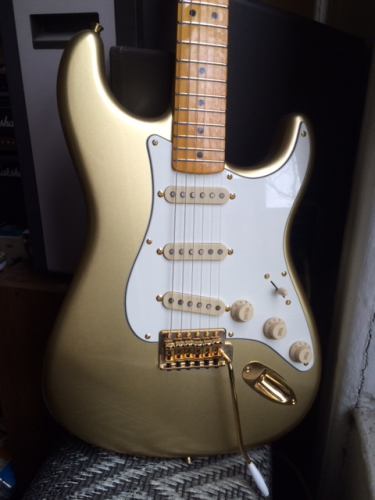
Recently, I started thinking I might want to change the green Strat’s pickups out. I started to learn more about electronics, pedals, and other stuff, and realized that Vintage ‘69s are not quite my style. The nail in the coffin came when I got this amazing Gold Sparkle Classic Vibe Strat used for $250, and what do you know? In a small room at least, the pickups (Tonerider Surfaris) sounded better. They had more mids. I realized that I love mids, again. The green Strat still cut through better in a big room, but it didn’t have the same sweetness in simple, day to day playing with just a cable as the main effect or a little overdrive. Cutting to the chase, here’s how I finally managed to take the plunge and install a new set of Original ‘57/’62s in my Forest Green Metallic 62 RI Strat.
Backing up a little, I tried to rewire and install better pickups in a Squire 51 that I still have (and want to get rid of). I had to ask my tech (Ha Ha! My Boss!) to finish the job. So, I was a little snake bit about the new project. But I watched a lot of Seymour Duncan videos, took notes, collected the required tools, and one day recently, off I went.
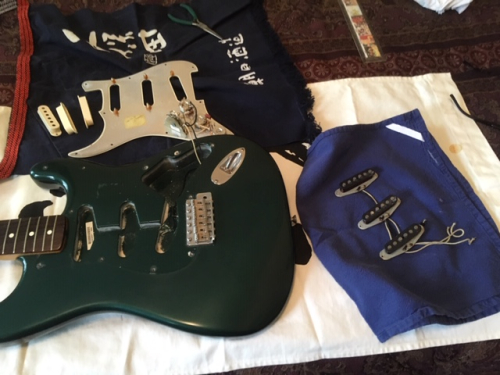
All I had to work with was a small Philips screwdriver, the soldering iron, razor blades, a small wire cutter, painter’s tape, some Saki Server Aprons to protect my bedspread, scissors, solder, and my recently bought-at-the-drugstore reading glasses. The last item proved to be absolutely essential. I kept going over the various Duncan videos but finally decided to go for it and refer back to specific ones if I needed them. It turns out that two of the videos were the most relevant.
I don’t want to go painstakingly through the various stages and details of the process, because if you’re reading this, you probably know what they are. However, I do want to share some insights that I picked up and one very surprising fact.
First of all, there is the decision as to whether you’re going to cut the wires or preserve the full length. I talked to Rick briefly a few months before I took the plunge, and his advice was to use a decent soldering iron (40 watts minimum) and “cut the wires.” In the video, the instructor cuts the wires but suggests that you might not want to if you may someday consider selling the pickups. I tried to do it without cutting the wires and it was impossible to get the pickguard assembly back onto the guitar. You’re cutting the wires to fit into a Strat – Ha Ha! They’re Strat pickups, right? Forget it! CUT THE WIRES! But wait a minute… don’t cut them too short because…
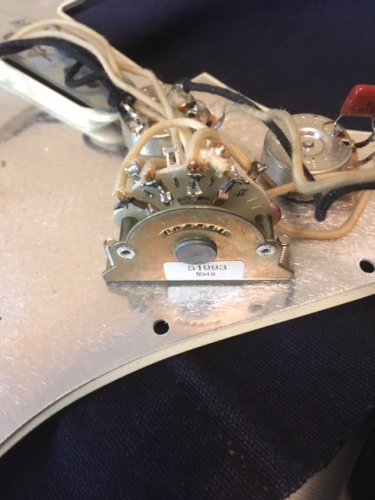
After I finished, I tried the pickups out (In nifty video, they show you how to do this without any strings) and discovered that the bridge and neck pickups were reversed in relation to the pickup switch. In frustration, I was going to put the whole thing away for another day. But I was sure that my grandfather, Dan Foley, a master carpenter and stagehand, would never have done that. I opened the guitar up and easily switched the wires. The funniest part was that in the comments of the video, someone pointed out that the Seymour Duncan Instructor’s instructions were wrong! The commentator was right! I followed the instructions to the letter, and it came out wrong. No worries, there was enough wire left to get the short wire to the further post.
Another thing – reinstalling the pickup height adjustment screws is a somewhat crucial part of the job. It seems easy but you’ve got to pay attention. Make sure the lugs are flush to the internal face of the pickguard. I didn’t think about it at first and I had to uninstall at least one pickup to fix the situation. And another thing -soldering irons get really hot! Even the shaft!
One of the videos shows you how to set the pickup height. This is going to be really important later on, so you might want to take note of it before removing the pickups. If your guitar is sounding really good going in, get these measurements. I didn’t. I’ll work on the overall setup as the next part of the project, but read on…
When I fired up the guitar, it sounded great. Livelier and brighter to my ear than the Custom ‘69s. Perhaps a tiny bit less quack on positions 2 and 4, but plenty quack, no doubt. Much more than on the American Special Stratocaster (see article). The B and E strings were all weak and weird as is the case with vintage pickups where the G string pole piece is ten times higher than the E and B. This is where the setup comes in. But the outcome was clear. I started zipping all around the fretboard like I hadn’t in weeks out of sheer inspiration, joy, and a sense of accomplishment.
On day two, I fixed the pickup height problem, mostly, and the guitar sounded more balanced. I started playing the guitar most days and found it a lot of fun to play but it obviously has been played a lot, the frets are tiny, and it needs a better overall setup. But the pickups…?
I finally fired up Goldfinger and the Green Strat and did a quick A/B test. Well, Goldfinger still sounds fatter. Perhaps a little duller in positions 1 and 4. I have had several people say that the Green Strat “sounds thin.” This often seems to happen when I’m playing with people who have Fenders with humbuckers, either Teles or stacked Strat pickups.
Do Strats sound thin? One thing is certain. The bridge pickup of Goldfinger sounds more like the American Special Stratocaster (Texas Specials), ie more mids, more of a legitimate lead tone. Think “Free Ride” by The Edgar Winter Group, a solo played by the great Ronnie Montrose with Rick Derringer, Edgar Winter, and Dan Hartman looking on (or was it Rick Derringer playing the solo with Jimi looking down from the Skies?). That is a burning solo and a burning sound which I totally equate with a balls to the wall Strat bridge pickup. That sound may never come out of the Green Strat. Not with vintage style pickups, at least.
In the final analysis, I’m really glad I swapped out the pickups and I’m ready for the next project, switching the hodgepodge of pickups in my ’76 Hard Tail Strat for the, you guessed it – Custom Shop ‘69s. I use the guitar exclusively for slide, and I want a more balanced tone, plus positions one and five are not that attractive to me. If it doesn’t work out, now I have the confidence and experience to re-install the hodgepodge or go for some Tex Mex pickups or whatever else tickles my fancy. And I saved myself a hundred bucks. -Christian Botta
-
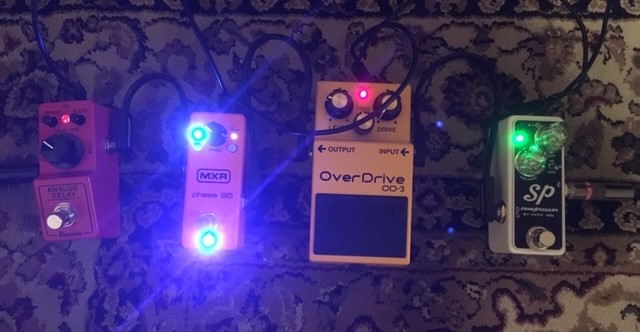
We're living in the golden age of stomp boxes. Pedal reviews, instructional videos and comparisons proliferate on YouTube. Newbie players acquire gargantuan pedal boards. And top selling pedals are sold out everywhere. There’s no question, effects pedals are massively popular right now.
What follows here isn’t an exhaustive look at all things pedal but notes from my recent and older adventures in the land of stomp boxes, and a few tips that I’ve absorbed along the way. Plus, there are links to pedal videos and a couple of live performances, too.
Distortion Pedals
Years ago, I needed a new overdrive/distortion pedal. I used my ears and decided to buy a Boss OD-3. It’s worked out great for me and I played it at tons of shows and on recordings. I play a lot of slide guitar and the OD-3 sounds great for that.
It has a bit of a midrange bump, which makes it sweeter than a Blues Driver, a pedal that I had been looking for recently. (Check out Michael Banfield’s comparison of three Boss overdrives) The OD-3 is also very transparent and lets the sound of your guitar shine through. The sound is what I would describe as “splattery” or “bristly” as opposed to “granular.” I just got a brand new one to replace my almost 25-year-old original, which started to exhibit intermittent weirdness, some weak connections, etc.
During the pandemic, I couldn’t find the OD-3, so I finally broke down and bought a DS-1. Yes, it’s a totally different sound. I always thought the sound was too fizzy and harsh. I didn’t really understand how to use it. But I saw a guy using one at The Shrine in Harlem, where I play a lot, and it reminded me a little of the sound I heard when I saw the New York Dolls play at the South Street Seaport in Manhattan – big Marshalls in the open air. Also, it was one of the only Boss pedals I could find. A student of mine loves it – he’s mostly into punk. It’s a fun pedal to experiment with, and great for an extra sound playing live, the Heavy Sound.
I eventually found the Blues Driver, again influenced by another player, a friend who had a modded version. Researching it got me to understand the somewhat non-linear quality of the knobs, ie there’s a spot around one or two o’clock where the distortion really kicks in. I don’t like it much for slide. One of my friends remarked that I sounded “too crunchy” on a gig I played. It definitely has that saturated, modern overdrive sound that many people look for. I don’t exactly understand the name. Blues? Depends on what style of blues you play. Maybe more in the low/cleaner settings with the volume cranked. The upper range is more of a smooth, British sound.
In the fuzz category, I picked up a brand-new Electro Harmonix Triangle Big Muff for my birthday this year. I had wanted a new Big Muff for years (my first pedal was a Ram’s Head Big Muff), and I saw this one in the display case and it was over. Take a look at the way the camera is shaking at the end of this video of my band doing Purple Haze (actually the whole band and especially the snare hitting the quarters). But I heard a demo on YouTube where many more sounds came out of an original one. Maybe I need to try an amp with more mids like they used. But it does have some wonderful sounds, like a smooth, round, Fripp and Eno, violin-like tone. Definitely $100 worth of pedal.
Phase Shifters
I’m absolutely crazy about phase shifters, and when MXR came out with their reissue of the MXR Phase 90 Script Logo, I had to have one. I never liked the block logo reissue version, finding it too harsh and hot sounding. But it might work better live. I want one!
The lack of an AC adaptor and led on the CS Script is inconvenient for onstage use. Plus, it’s a little intense for some applications. So, on that same recent birthday that I got the Triangle Muff, my girlfriend bought me an MXR Phase 95 Mini, and I love it (and her). The Phase 95 has more variability, and no batteries! It offers the sounds of the old Phase 45 and the Phase 90, with both Script and Block logo options through small push buttons. And it has more lights than a Christmas tree! The sound is less magical than the CS Script, but there are many highly useable settings. It has a noticeable boost in volume when engaged, which I much prefer to a drop. And it plays nice with the Blues Driver.
Probably my coolest pedal is a Mu-tron Phasor II. It’s one of the coolest looking pedals I’ve ever seen, but the sound is where it excels, a rich, complex, analog sound that can fill up a room. It has tons of range on the highly interactive knobs. Check out my article on the Mu-tron Phasor II here.
Tremolo
Tremolo is the main modulation effect for the blues or the real rootsy stuff. If you trot out a chorus in a blues band, the blues mafia will immediately order a hit on you. For Americana, it’s almost as rigorous. I saw Robert Plant and his band recently, and they played a distinctly American style of swampy, bluesy rock, with many a sexy, moody, tremolo plus overdrive texture.
A huge article could be dedicated to the ins and outs of tremolo, but we don’t have the space to do that here. Just be forewarned, although you’ve seen tremolo on amps that were made many moons ago, it’s far from a simple effect. In short, there are three types of tremolo: Optical, Bias Shifting, and Harmonic. Optical is the most common and is found on a Fender Deluxe and Twin. The Boss TR-2 is an optical tremolo (check out the video below for the basic sound). “Power tube bias shifting” tremolo (different from the pre-amp tube variety), can be found in a Silverface Princeton Reverb. It sounds beautiful – the minute I heard the 68 Custom version of the amp, I knew I was going to buy one. Harmonic Tremolo sounds fantastic as well but is rare. It has a milky, phasey character, which is very attractive. A nice overview of Tremolo types is here. So, the pedals?
A guy I was playing with once tried to unload a Boss TR-2 on me. He let me take it home, but I didn’t hear its soul or buy it from him. I didn’t really know how to use it. Later, I needed a tremolo pedal to play a song I had written live. I bought a fancier tremolo, the Source Audio Vertigo, quite literally because of the amazing demo by the owner of 30th Street Guitars in NYC. Source Audio is always trying to get you to go online and download all of these other sounds and magic potions, which I’m sure are great, but it’s the opposite of a stomp box mentality.
Main point – the pedal can emulate all three of the tremolo types mentioned above, and it does them well. The downside is that there’s no battery power and it doesn’t seem to work with a powerall adaptor or the like. Not entirely stage worthy.
With this in mind, I broke down and bought a TR-2. I found that it really has something to say. A key point is the use of the waveform knob. It doesn’t go from low to high, but rather toggles between two different types of waves, with infinite gradations in between (The Vertigo has a similar knob). Using this knob correctly (do not just leave it in the middle!), you can get some highly useful sounds.
Oddball
Just for shits and giggles, I’m including this crazy pedal, the DOD FX 25B Envelope Filter. The great Aaron Chesler gave it to me and it’s actually for bass, a bass auto-wah, basically 😉. When I first tried it years ago, it didn’t seem to be making much noise. A weak battery? Maybe it was just cranky at being uprooted. But recently, I took all my pedals out and played them, and the DOD perked up considerably with a fresh battery. It’s not exactly a Mutron III, but I imagine Jerry could use it for “Estimated Prophet” and some Deadheads wouldn’t know the difference. I brought the DOD to a gig and you can hear a bit at the beginning and end of this truncated “Cissy Strut” performance at my home away from home, Silvana. Also in use is the aforementioned, too crunchy Blues Driver. I’m playing the Silver SG, and I think the lead sound is notable (Orange amp). But that guitar kind of plays itself.
Effects pedal fever shows no signs of abating. At times, it seems that talking or writing about pedals, reading about them, watching videos about them, obsessing about them and even telling them bedtime stories like they’re your children is actually more fun than playing the guitar. What are the stomp boxes of your dreams?
Look for another installment of Stomp Box Serenade, where we’ll discuss some Fulltone pedals, analog delay, and much more. -Christian Botta
-
I love phase shifters. Unfortunately, their heyday was about forty-five years ago. So, you’ve got to find ways to fit them into your music. Or fit your music around the phase shifter sound. The early Cure comes to mind. Phase shifters aren’t subtle.
Lucky for me, I am the proud single owner of one of the greatest phase shifters ever produced, The Mu-Tron Phasor II, manufactured by a company called Musitronics from the NYC area. If the Script Logo MXR Phase 90 is its nearest competitor and by far the most popular phaser, the Mu-Tron is perhaps the more storied, mythical, and outlandish. And you can easily buy the custom shop version of the Phase 90 Script logo now for $140. Of course I have one and it sounds delicious.
What does the Mu-Tron sound like? See the above video for a demonstration. The quality that most comes to mind is thickness of sound. It has a rich, warm, analog tone that runs through all the settings. And it only gets fatter as you turn up the depth and feedback. There’s an incredible range of sounds that come out of the three knobs, and many of them are beautiful. Others can get downright weird and even scary. It does a creditable Univibe sound, no mistake, as well. And it’s very psychedelic looking, or even a kind of '70s modernism, which I am crazy about.
The story of how I came upon my Mu-Tron is serendipitous, despite the rough treatment I got when I went to Manny’s music in its glorious, celebrated ‘70s hustle and bustle. I was fifteen years old, and the salesmen would never give me the time of day – wouldn’t let me try out anything and they wouldn't even demo it. Totally different from today, but maybe they were busy actually selling stuff. Anyway, I think I said I wanted a phase shifter and they said, ‘well there’s the MXR and there’s the Mu-tron.’ Me: “lemme see ‘em!” Them: “You can’t try ‘em!” Me, thinking: “Fuck!” Them: “Which one do you want?” Me: “Wow! The Mu-Tron sure is gorgeous! I’ll take the Mu-Tron!” Them: “Sold!”
I didn’t really know what to do with it. Although I was a huge Rolling Stones fan, “Shattered” was at least a year away. And another one of my favorite bands, Pink Floyd, was totally out of style. A couple of years later, it broke down and I put it in the closet. I probably tried to get it fixed to no avail. In the early nineties, I was working in a music store in SoHo and a brilliant technician named Takeshi fixed it for me. He laughed as he told me how all he had to do was replace something called an IC chip which cost $2. It was alive! Check out this interesting article about a Mu-Tron Phasor II restoration.
It sounded incredible to my more experienced ears. I played it at CBGBs and it filled the room with a lush, sweeping breath of fresh air. It was like a fifth member of the band. I used it on a demo recording where it seemed to bleed onto all the tracks, making the song sound fabulous and unified. I cranked it up in another studio where it blew the engineer’s mind with its soaring texture and tone.
Then it broke again. Back in the closet. But a few years ago, I brought it into the music school/store where I worked, and the owner tried to fix it. For a second or two, there was the amazing sound! But then it seemed to fail, sending unaffected sound through. *Sob* I took it home.
More recently, I gathered all my pedals in an effort to consolidate and see if any could be sold. I tried a bunch and was thinking of taking some to Main Drag where Takeshi now works. I saw on their website that they had a Mu-Tron Phasor II for sale for $500!! Hold on! After all the other pedals, I plugged it in. It… Sprang to life! It’s alive! I will never live without this pedal again. -Christian Botta
-
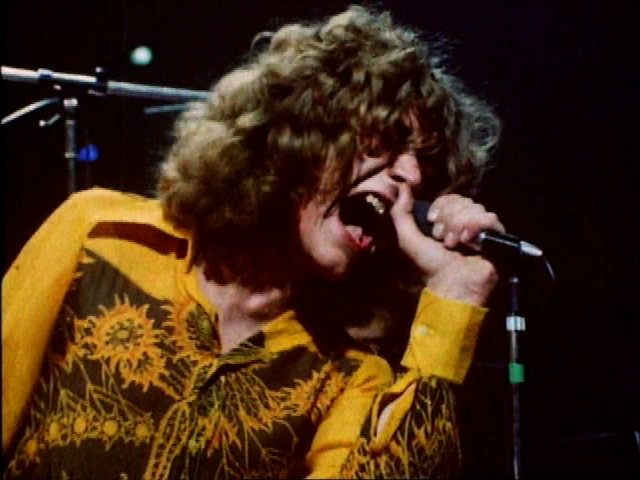
Learn the central riff of this Zep classic, including the rhythm, picking, fretboard theory, and more!
Playing a repetitive riff, over and over again, can be a great way to get some exercise for your left and right hands, as well as giving you an idea of where you are with the techniques involved. The main riff from Led Zeppelin’s masterpiece, “How Many More Times,” from their first album, is a perfect vehicle for this type of exercise. Let’s start by looking at how the riff works, and then I’ll give you some tips about practicing it. I recorded an in depth video that you can access below.
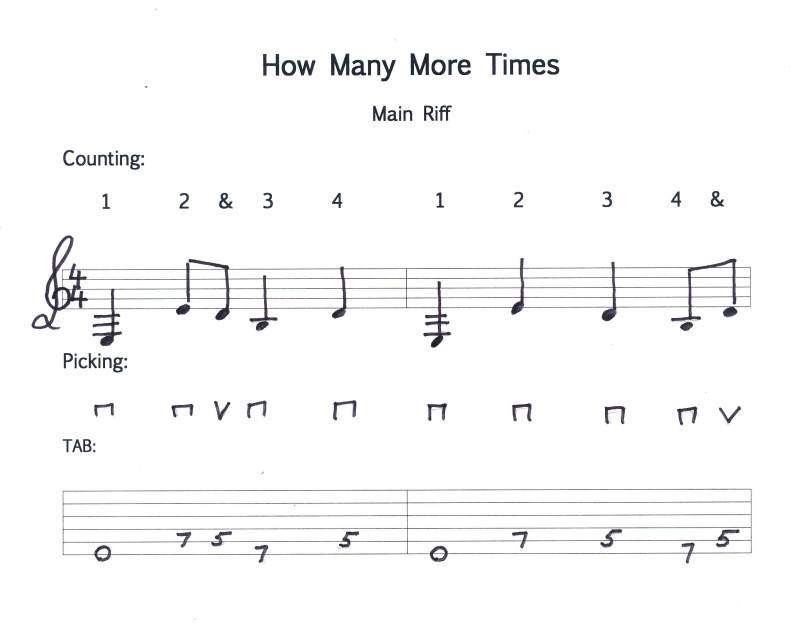
The riff is simple on the surface. There are five notes, played twice in the same order, but with a rhythmic variation the second time around. The notes are E – E – D – B – D. E and D are repeated, and the two Es are played an octave apart. This forms a “question-and-answer” structure. Take a look at the chart below.
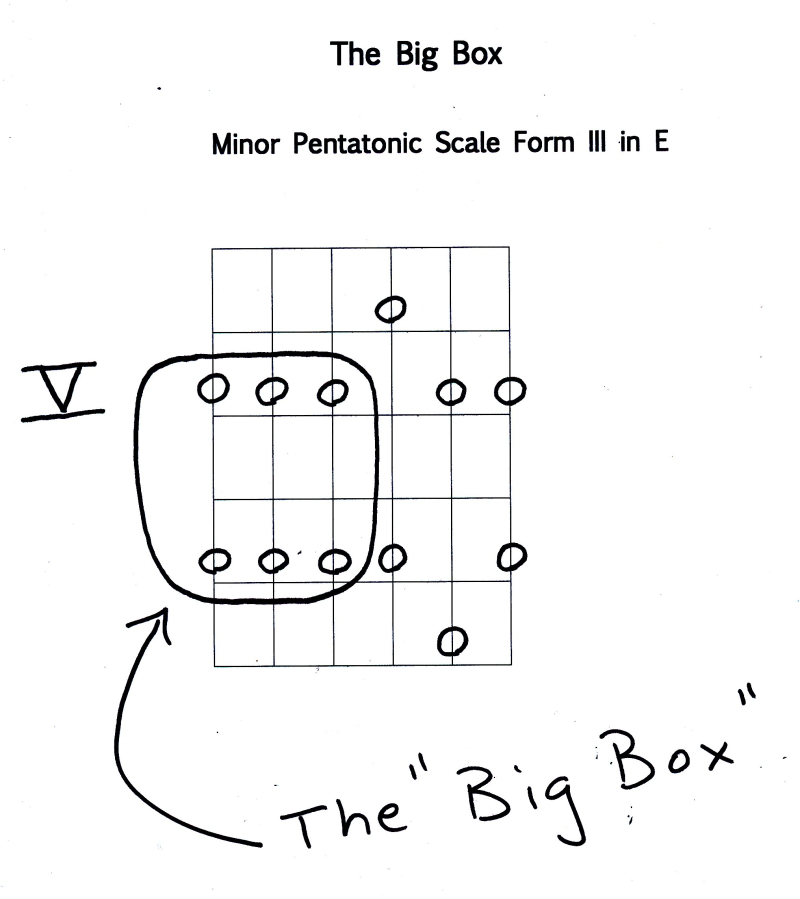
The Big Box
The notes in question come out of the bottom part of the Form III Pentatonic Pattern in the key of E. I call this section or box from this pattern, The Big Box. I take this name from another box, which is known as the “high box,” from the older blues tradition. I feel that this box is very important and somewhat overlooked. It’s the source of many a great riff because of the easy access and the fact that the bass strings provide the necessary thick tone. The low, open E is taken from pentatonic pattern I in the open position. Other songs that use this combination include Purple Haze and Whole Lotta Love.
The Rhythm
The underlying rhythm is known as a shuffle or 1 & 2 & 3 & 4 but with each quarter note divided into three, or triplets. Long – short – long etc. The middle note of the triplet is usually left out of rhythm figures. The genius of the riff is how it places the triplet first on beat two, and then on beat four. This rhythm develops a tremendous amount of momentum. And that’s what rock and roll is about. It can be a little confusing to pick up at first. You have to listen closely.
Picking
The picking is a combination of mainly downstrokes and a couple of upstrokes. The pattern follows the rhythm exactly, with the downstrokes hitting on the strong beats, and the two upstrokes hitting the quick, triplet eighth notes that come on the second half of beat two in the first measure and beat four in the second measure. The pattern looks like this: Down, Down-Up, Down, Down/ Down, Down, Down, Down-Up. Take a look at the graphic above. I checked early live performances by Zeppelin to make sure I had the pattern right. I did and I advise you to take a look at these stunning performaces: Live in Denmark, 1969; and The Royal Albert Hall, 1970.
Practicing
A good method for practicing a piece is to warm up a bit, and then take a shot at the piece, warts and all. Just go for it. Then, work on the hard spots and details that you want to improve. After you’ve worked over the details, take a number of passes at the piece, riff or whatever you’re working on, and see where you’ve gotten. When you’re doing this, it’s extremely important to just keep on going if you make a small mistake, for instance, partially or even missing a note completely that you usually might get. Recovering from mistakes is a skill that you will have to develop to be an effective guitarist. It can also be very beneficial to slow the riff down for practicing. The song at full clip is faster than one might thing, a ferocious 146 BPM. Don’t try to play the rest of How Many More Times until you have completely mastered the main melodic riff.
The Sound
Try to practice with a cleaner sound at least part of the time. Add the distortion in later when you have a bit more control of the playing aspect. I used a Fuzz pedal for the demos, but any overdrive or distortion will work. Listen to the record and note that the main riff is cleaner than one might expect. I played it a little dirtier than necessary, probably because I just got a new fuzz pedal, the Electro Harmonix “Triangle” Big Muff, a replica of their first fuzz from around ‘69/’70. I couldn’t help it. Then I pulled out my Fulltone ’69 pedal because it was less noisy. I then made a mental note to try to replicate Jimmy Page’s tone a little bit more. We all try!
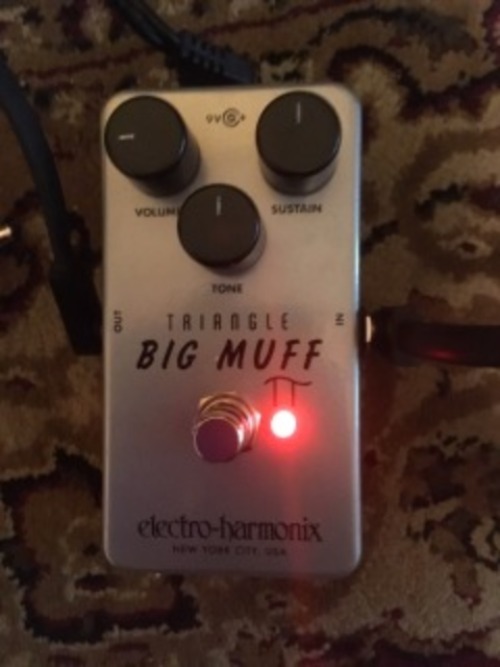
Big Muffs in general seem to have a lot of smooth bass. There are many versions but I definitely like this one, and Electro Harmonix is always a great value.
I decided to do this lesson because I put this amazing riff into one of my student handouts, thinking it was easy. I found that it was a little difficult for the total beginner to pick up, because of the rhythm. But I think there is much to be learned by beginners, intermediates, and even advanced guitar students. We’ve gone over the basic notes and fretboard positioning of the riff, the rhythm, the picking, and the sound. All of these aspects are worth investigating and working on, as opposed to just rote emulation of a YouTube video or tab. Dig in. If you’re a beginner, be patient. You could work on this for a week, a month, or a year. And there’s nothing wrong with that. Most importantly, have fun with it! -Christian Botta
-
Sitting On Top of the World is a blues song that has fascinated me for years. I originally heard the Cream version, and that led me to Howlin' Wolf. In this lesson, we'll take a look at the structure of the song, sometimes known as the inside. That includes the harmony, rhythm, and melody. The fills, dynamics, and other elements comprise the outside.
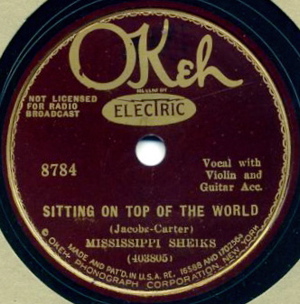
The song has been passed down from generation to generation. The first group that made its mark with it was the Mississippi Sheiks, a popular string band from the late 1920s and early 1930s. Their version is similar to Cream’s in significant structural ways. Our aim is to understand what that structure is, so we can apply it to our own versions, which might include a jam session, cover version or just plain old fun and woodshedding. The video below covers the details and more of this article.
Between the Sheiks and Cream, Chester Burnett aka Howlin' Wolf put his stamp on the tune (see link below). Still more or less structurally the same, Wolf’s version includes a jazzy style with string bass and slinky piano fills plus the squawking, visceral electric guitar of Hubert Sumlin. Cream further electrified the song and streamlined some of the harmonies, recording it on Wheels of Fire, and the live, Goodbye Cream. You should listen to all four of the aforementioned versions for this lesson.
So, what’s going on in this tune? The most important features of the song are that it’s a nine bar blues, and how the melody plays an intrinsic role in that pattern. The nine bar structure is based on an eight bar blues, of course. To play the blues, you will need to know how to navigate both the twelve bar and the eight bar forms. The eight bar is less common but withstands variation quite well. “It Hurts Me Too” by Elmore James is a straightforward version and “Key To The Highway” is a common variation. Take a look at the charts below (and the link to a 12-bar article) to see how the Twelve Bar, Eight Bar and SOTOTW (Sheiks and Wolf/Cream/CB) patterns differ.
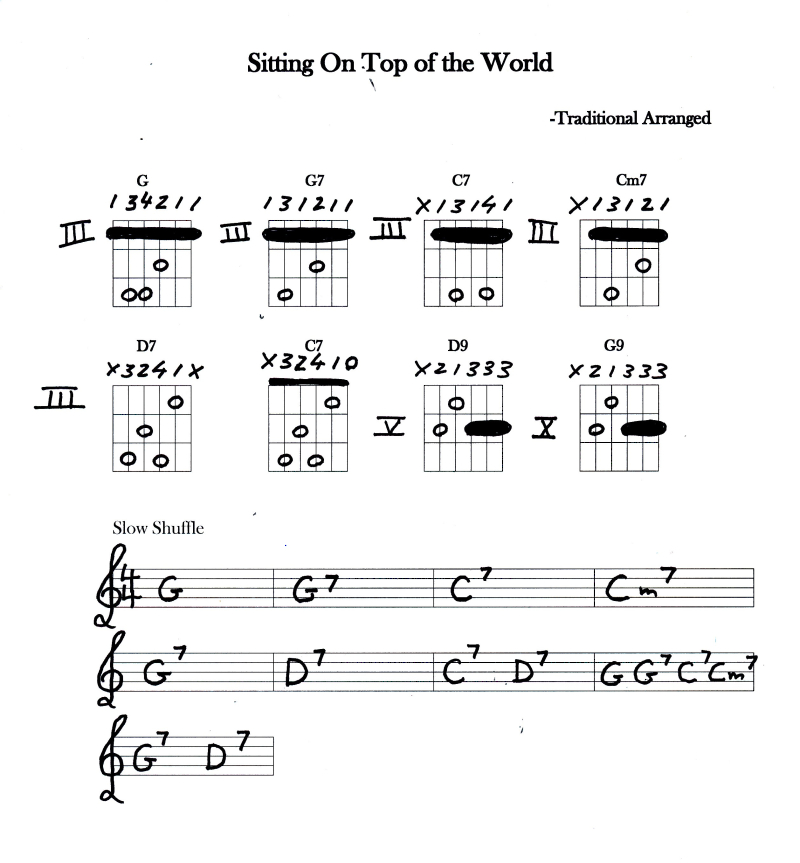
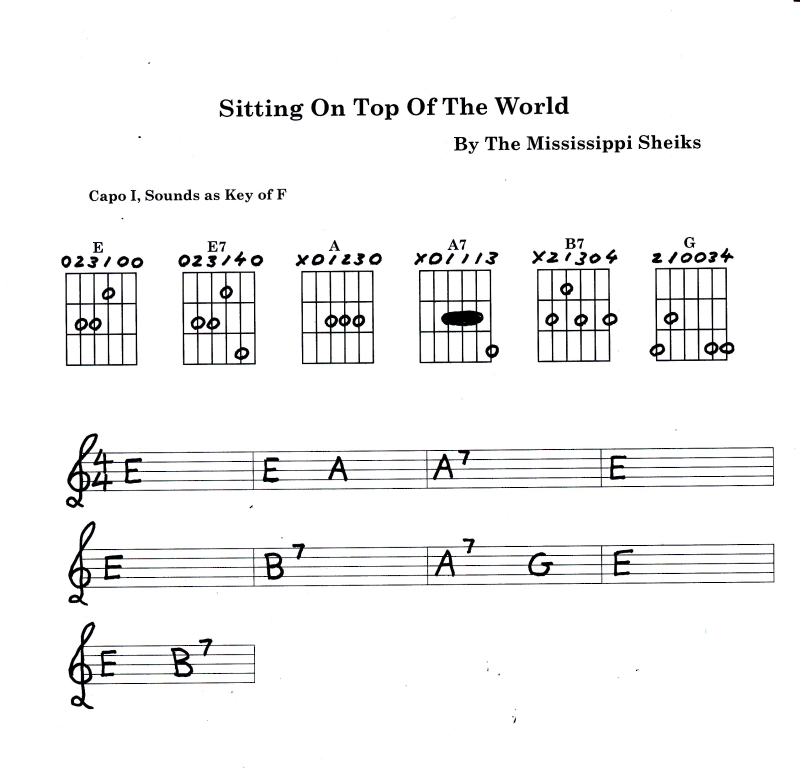
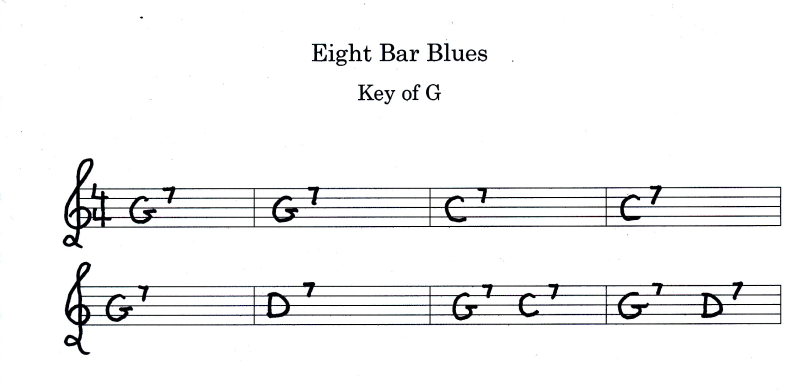
Why nine bars? Often, you’ll hear interviewers ask songwriters, “Which comes first, the words or music?” Many rockers, myself included, start with the music – a riff or chord pattern. We then might assume that the chord pattern in SOTOTW is what makes it spin. But that’s not the case. The seventh bar, which I sometimes call the "mystery bar," because it's hard to hear, is added to accommodate the melody, and more importantly, the rhythm of the melody. Listen to the song, paying attention to the bars, and you’ll see that the hook line of the song, “Because I’m sitting on top of the world,” falls exactly into the seventh bar. It’s possible to squeeze all the lyrics into an eight bar blues, but it doesn’t sound nearly as good.
The choice of chords for the seventh bar offers interpreters of the song a chance for self-expression. The Sheiks use a descending, two chord pattern, IV – bIII, which translates as Bb7, Ab in the key of F. (In my musical example, the chords are written, A – G in the key of E because of the Capo.) In my version (traditional) as explained in the video and in the chart below, I use IV7 – V7, or C7 to D7 in the key of G. Both Cream and Howlin’ Wolf avoid a defining chord, emphasizing the vocal melody and the bassline.
I didn’t come up with all of this by myself. I consulted an article, “The Common Stock of Schemes in Early Blues and Country Music,” by Nicholas Stoia, a music theorist who teaches at Duke University. The article posits that there are five main chord/melody/lyric "schemes" that form the basis of many classic blues and country songs. SOTOTW gets its own scheme. Six different harmonic patterns are presented for the seventh bar. Most of them include a V chord.
Listen to any version of the song and note the way the melody/words come in short bursts, three pairs, with each fragment starting as a pickup triplet to the downbeat of a measure. Finally, at the end of bar six and through bar seven to the downbeat of bar eight, the hook line comes in and ties it all together into a satisfying whole – a classic song! Then the turnaround kicks in, and we’re ready for another verse.
There is really no way to fake your way through this tune because there’s nothing quite like it that you may have heard. It certainly flows, but you need to know where everything is. Once you get the picture, there should be no need to count. You can also just follow the melody/words, but you need to know them, as well. This is why the song often results in a train wreck when attempted at a blues jam with people that don’t know each other or the song. When the house band plays their set at the beginning, you may sometimes see them do this song. Learn it, and you will be getting closer to being in the house band, yourself. -Christian Botta
-
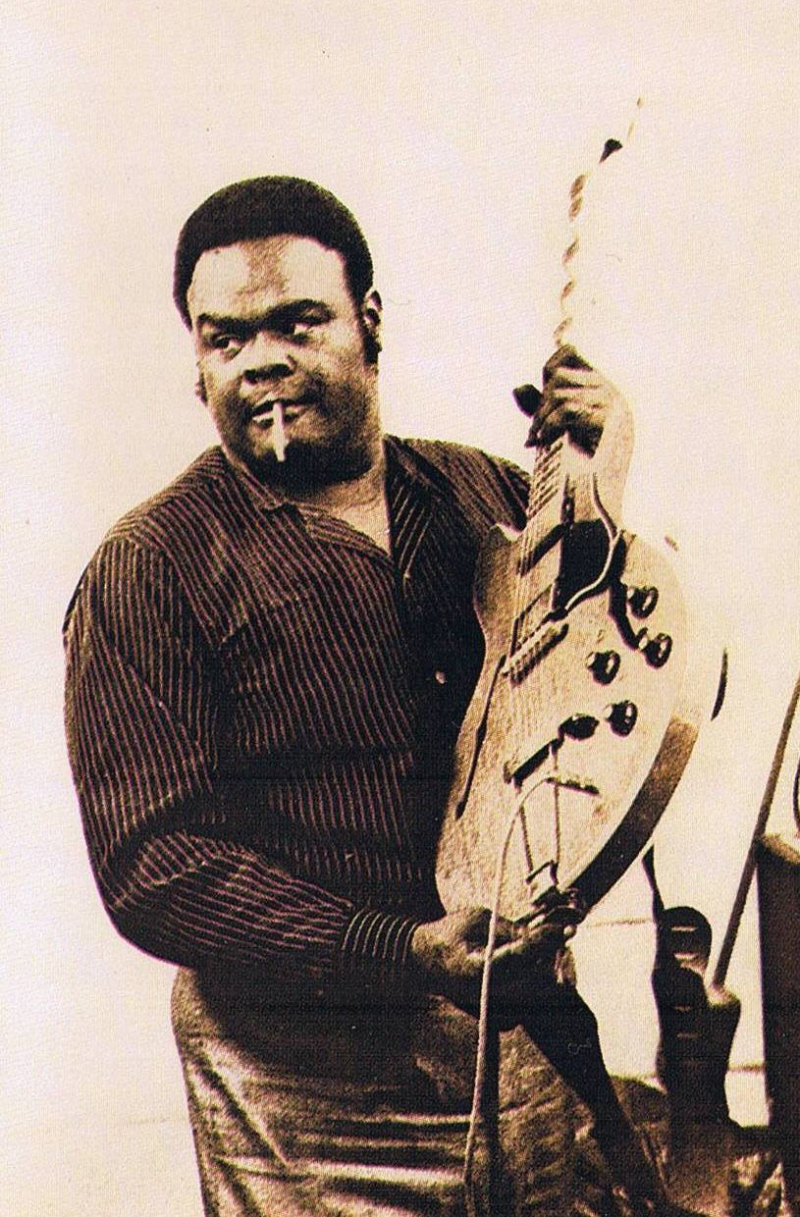
I’ve been a fan of Freddie King for a long time, but I didn’t take the deep dive until I had to learn the "The Stumble" when I joined a band called The Fountain of Blues. One thing led to another and soon I was ripping the Texas Cannonball’s riffs, chord changes and hopefully, his incredible joie de vivre right and left. It was only natural that one day I would learn the funky and fabulous, “San Ho-Zay.”
The first thing I did was transcribe it. When I’m learning a solo of any length, I always write it down in tab, using a pencil. I don’t notate the rhythm. Writing it down serves several purposes. It helps you to memorize the piece, and it serves as a reference for practice. Also, I can then share it with my students. You can see my original tab below. I started out practicing it in short bursts, just twenty minutes a day. But I realized I had to dig in if I was going to master it, so one day I spent a couple of hours on it and the basics fell into place. I could now attempt to play along to the record. Eventually, I recorded a version of “San Ho-Zay” with my band, Saints and Sinners. You can hear the entire album here.
The tune is based on a simple double-stop riff. You have to listen really closely to catch all of Freddie’s nuances when he plays the lick. The analog recording has that delicious warmth that everybody loves but in this case, it makes the little notes at the beginnings and endings of phrases a little hard to hear. I’m still discovering things in there. One thing that I found is that there’s a fragment that matches up quite nicely with the beginning of the main “Black Dog” riff by Led Zeppelin – I wonder what John Paul Jones would say to that!
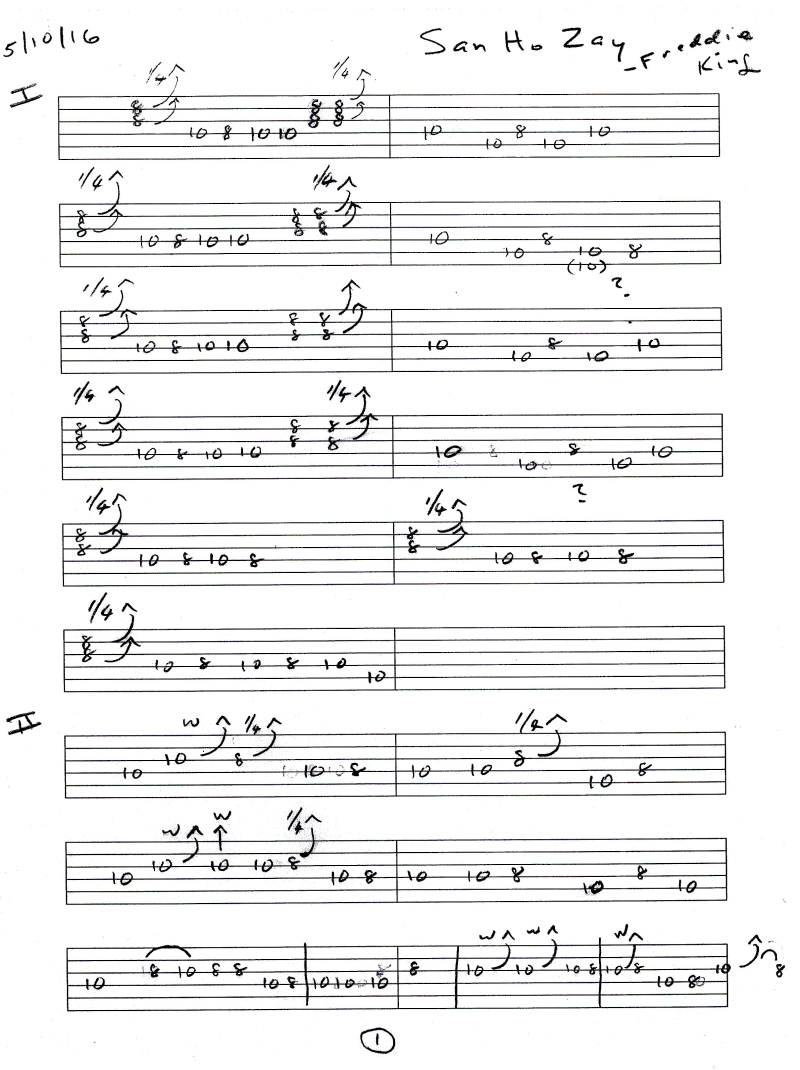
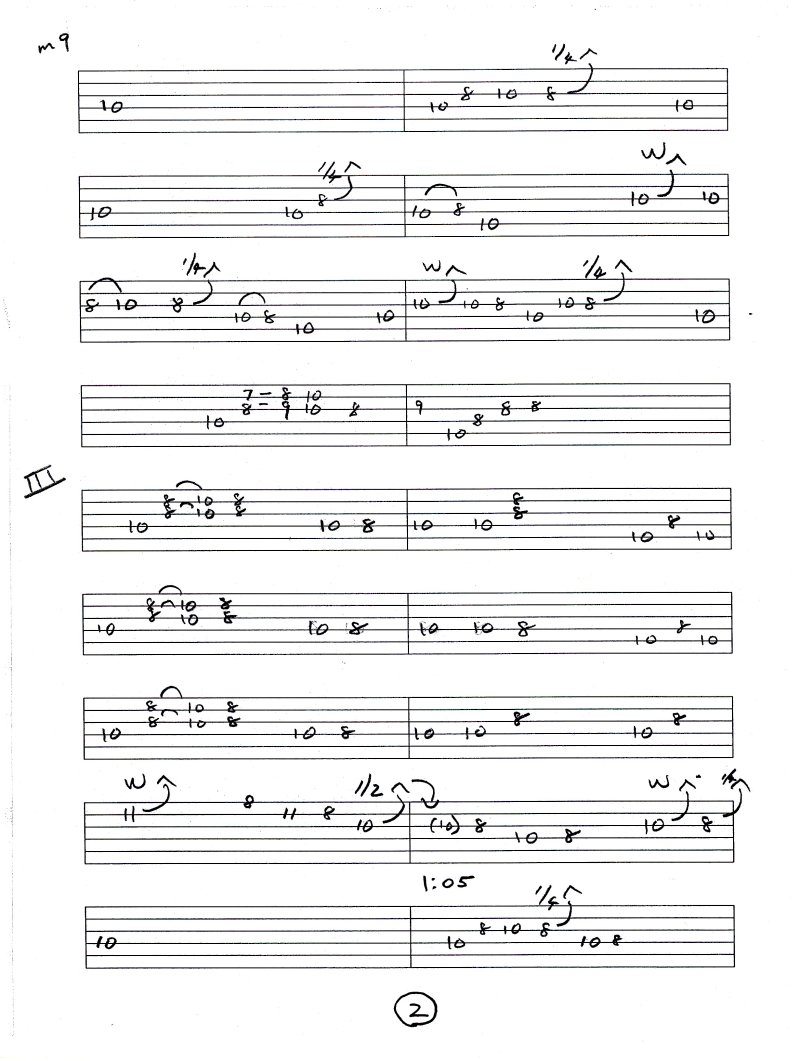
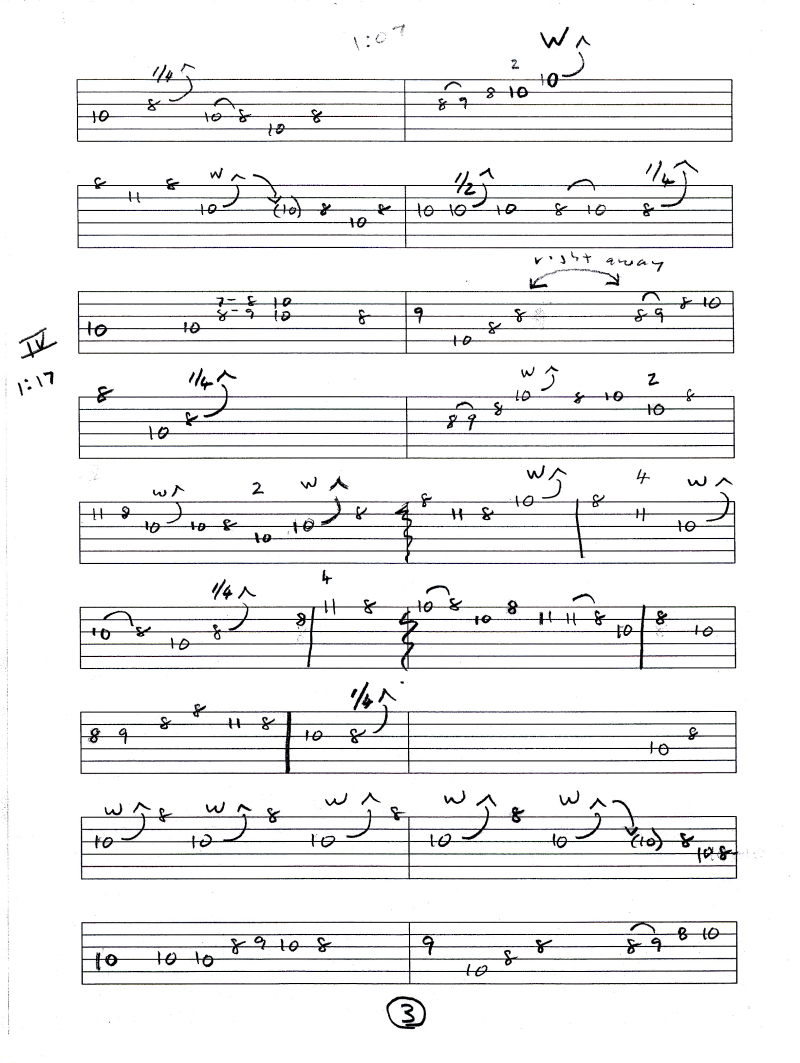
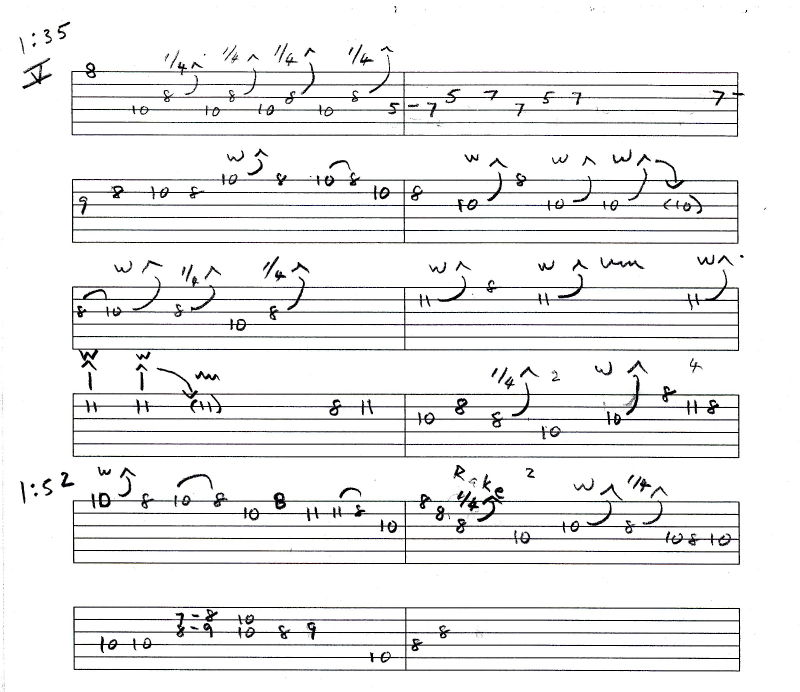
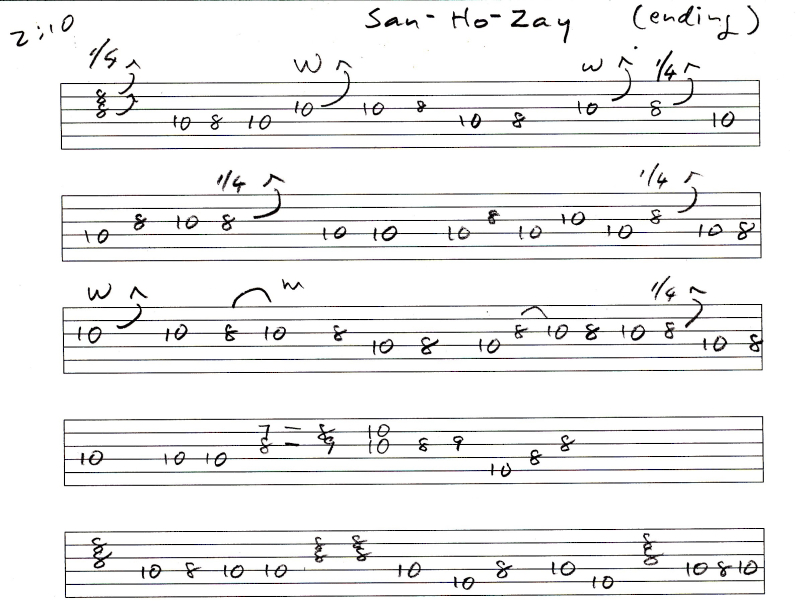
An interesting element of the piece is the form. The intro and the solos are twelve bar blues, but the second, third and final (fifth) choruses are all sixteen bar forms, with the first I chord section lasting eight bars. You really have to know the melody/riff to play along, and it can be difficult to teach the song to someone who’s not too familiar with the blues. I like my version of the turnaround lick, but I’m not sure if it’s exactly like Freddie. Do it your way!
The solos are of course a challenge. If you’ve spent time learning some complex B.B. King or Clapton licks, you shouldn’t have a problem, but you will definitely have to make some decisions on what fingers to use. It goes pretty fast, too. I recorded a video of myself recently playing along to the backing track that we recorded with the band (above). We skipped part of the tune for some reason and left out a couple of stops – crazy, I know. But I played all of Freddie’s solos so you can see how I did it.
An interesting aspect of the tune is the key, C. I love playing in C. But it can be a little difficult to wail in the upper register. Even though I’ve spent a lot of time practicing Mick Taylor’s incredible solo on The Rolling Stones’ “Sway,” and of course, "The Stumble," you can still get a little tongue tied playing a minor third above the upper register for A. Part of it is that Freddie and B.B. et all rarely go up there. You might even be wondering, should I do it? I can’t resist so, I’ve just got to work at it more. Just do a Louis Armstrong on the MF.
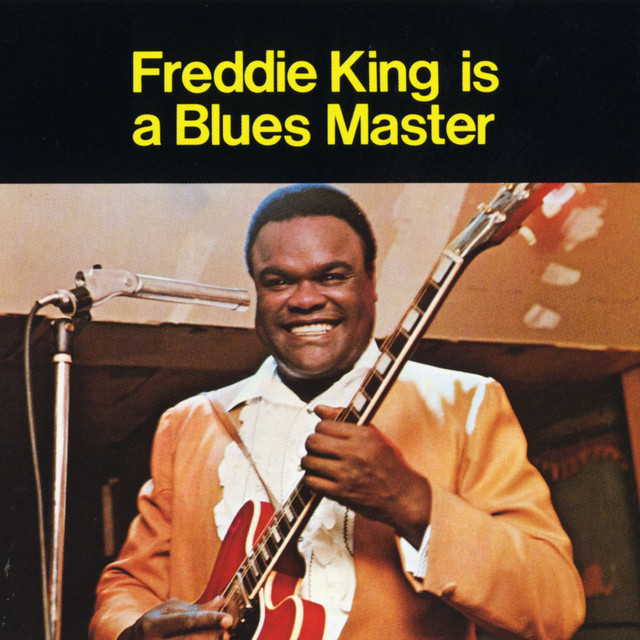
OK, so what are some other things that I copped from Freddie, my favorite of The Three Kings? On the record that I mentioned above, the changes to “World Gone Mad,” a funk tune with a little Curtis Mayfield flavor, were inspired by the double plagal cadence in Freddie’s “Get Out Of My Life Woman,” off of his album, Freddie King is a Blues Master. I definitely added something to it, one of the few times that important formula has worked for me. It also turns out the opening tune, “Goodtime Girl,” owes a major debt to “Boogie Funk,” Freddie's killer instrumental. It took me years to realize that! But whatever I'm playing, I always try to get the emotional directness that Freddie lives and breathes into the music.
-
The beautiful chord changes of “Little Wing,” Jimi Hendrix’s psychedelic ballad, are an opportunity for beginners to up their game. You may feel that you want to play the intricate melodies, fills, and leads that Jimi and others play, but you’ll be much better prepared for that if you master the changes. You need to perfect these basic left hand techniques. But if you're already familiar with them individually, it’s a great song in which to put it all together. The video below goes into detail on how to do it.
There’s a lot to work with here so let’s dive in. The rhythm is very simple. It’s a slow ballad in the key of E minor that uses the same strumming pattern as Knockin’ On Heaven’s Door. I like to think of the overall chord pattern as being broken up into three lines. The first line is simple, just Em – G – Am – Em, one chord to the bar over a four bar phrase. Take a look at the chart below.
Download Little Wing Right Hand Close-Up
The fireworks, so to speak, occur in line two. The first challenge is getting to the Bm chord in bar five. I usually start my students out playing chords with just three fingers, but here, it’s better to start using all four. A four fingered Bm chord sounds fuller and you’re less likely to have unwanted open strings ringing. Use a guide finger to get from the Em chord to the Bm chord. The third finger is the only choice as it's on the D string in both chords.
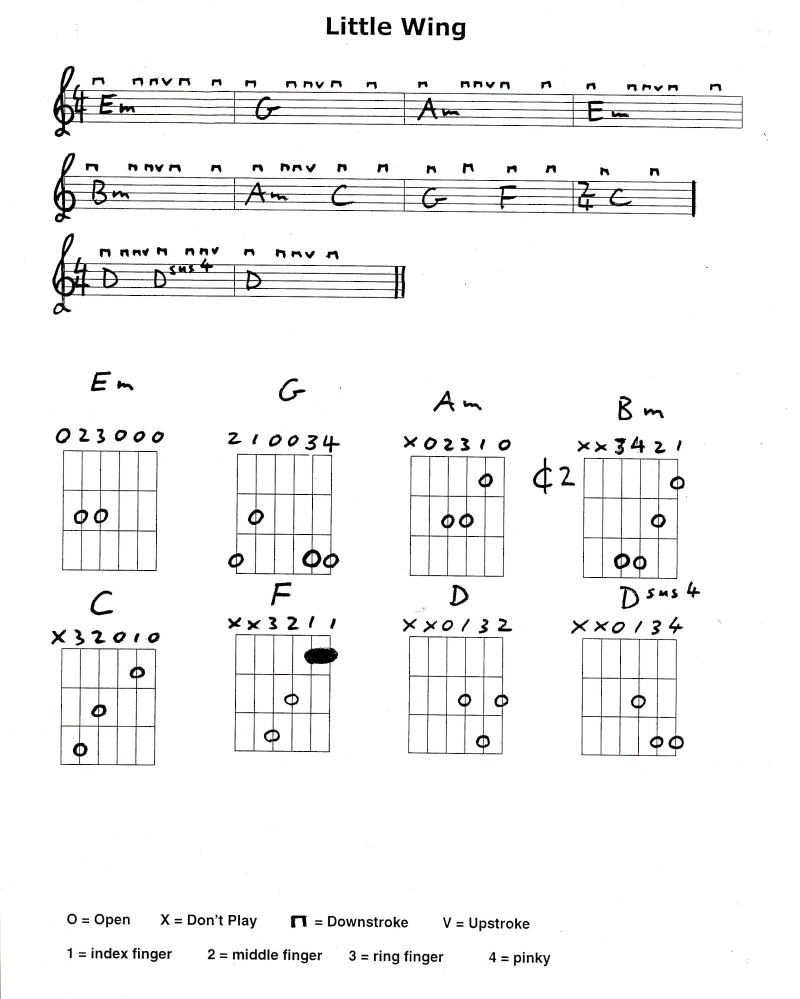
Just jump from Bm (which is at the second fret) to the Am chord in the next bar. To go from Am to C, keep your first finger down on the C note that’s on the B string at the first fret. Just open up the hand a bit and reach for the lower note (C on the A string) with your third finger. The second finger should not move that much.
Download Little Wing Left Hand Close-Up
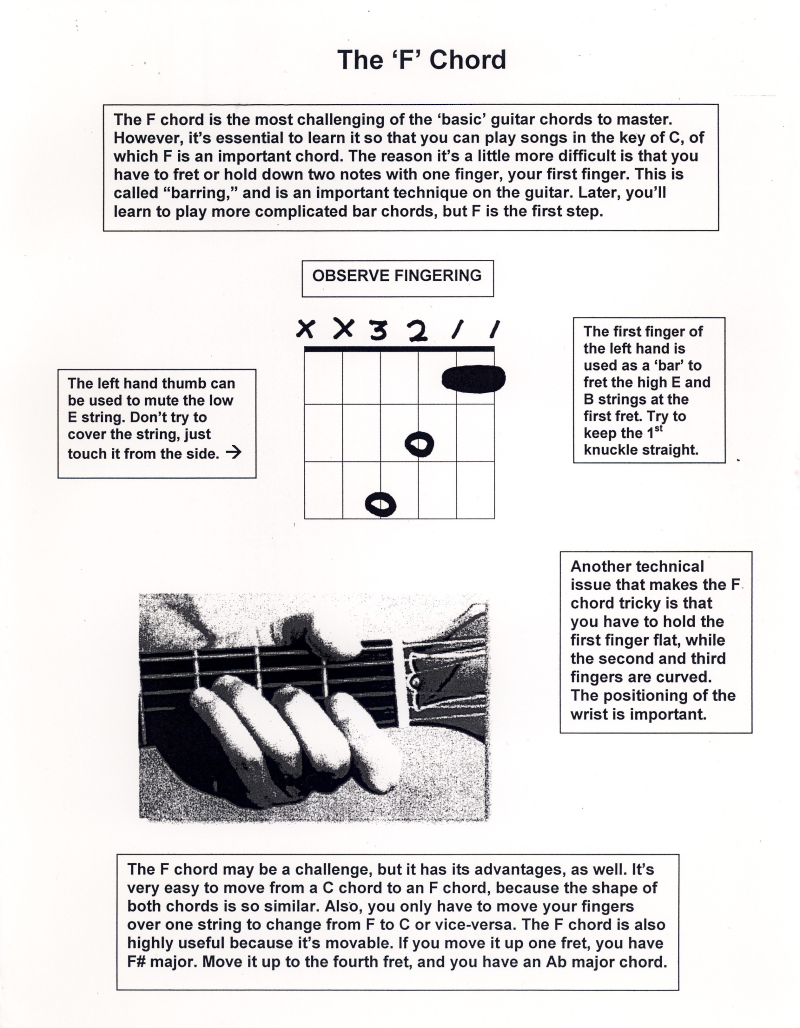
The next change is a little tough to master: C to G. I would use the four finger version of G (see the chart), with the second finger on the bass note, G on the low E string, but other versions will work. You be the judge. Next is what may be the toughest part for some beginners: The F chord. Use whatever your best F chord fingering is but don’t cheat and use Fmaj7 – it’s not in the character of the piece. Please see my F Chord Diagram below for tips if you need them. The rhythm thins out during this bar so that it’s easier to make the change. One of the things you may notice is that the chord changes have doubled up – there are two chords per bar, as opposed to one per bar in the first line. This is called the harmonic rhythm. When the harmonic rhythm gets faster, rhythmic activity, aka strumming, can become less.
From F to C is a breeze due to the hand position, but there’s a catch. Jimi inserted a bar of 2/4 – that’s a measure with two quarter note beats – because it felt right with the melody. You barely have to think about it, it’s just so natural sounding. But it’s important to know that it’s in there. If you have any trouble with it, you can count it out, or just use your ears. The pull of the changes is hard to resist. After this one bar of 2/4, 4/4 resumes.
Just one more change, to D major, and then, the last little flourish: The Dsus4 chord. Sus stands for ‘suspended’ because a G note is replacing the usual F#, and is therefore suspended above it. Use your pinky to play the G note at the fourth fret on the high E string, and you should keep the other fingers down while you do so. Dsus4 ‘resolves’ to a normal D major chord.
I’ve added a tiny strumming variation at this point, making the second half of the bar symmetrical to the first. You can see it on the sheet. This pattern is very common and is often used throughout entire songs. I thought a little variety might be in order and it adds some energy at the end. Then, there’s a bit of a pause. This is where Mitch Mitchell always does a drum fill. Make sure to repeat the song multiple times in a row when you practice. There you have it. Once you can play the changes in time, you can start to add little melodies or fills, play with the rhythm, and substitute different chord voicings to make the song your own.
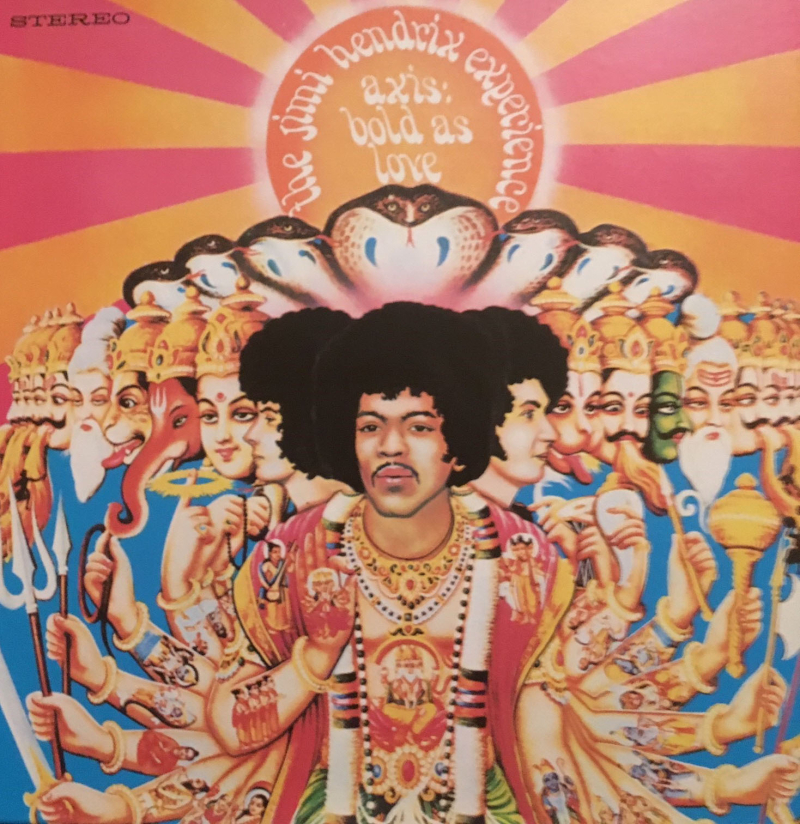
“Little Wing” is a song that’s favored by top notch guitarists. Make sure to listen to it before, during and after you practice. Jimi Hendrix’s original from the Experience’s unique and intimate album, Axis: Bold As Love (1967) is without question the greatest version. Eric Clapton’s rendition with Derek and The Dominoes featuring Duane Allman makes me think of this mythic group as “The Bar Band of the Gods.” Duane’s heartfelt leadwork sounds both spontaneous and as if he had been working it out for years, a difficult trick to pull off. Another surprisingly good take on Jimi’s classic was done by Sting, featuring the excellent, late Hiram Bullock on lead guitar. He interprets Jimi’s style into something of his own, with a soaring, otherworldly solo that sounds nothing like the 1960s.
As always, have fun with it! -Christian Botta
-
There used to be an adage that learning the blues provided a strong background for playing rock music. Much of today’s rock music isn't based on the blues, so this theory may not be entirely accurate anymore. But one thing still holds true: Learning the blues is a great way to learn how to play the guitar.
Why would the blues be a strong building block? How does it help you to learn to play the guitar? One reason is that there are clear structures, manageable scales, and fun licks that you can grab ahold of and run with right from the start. One of these structures is known as the 12 Bar Blues. Another reason is that there are many classic songs that use the 12 Bar form as their template. One is Johnny B. Goode, by Chuck Berry. Another is Folsom Prison Blues by Johnny Cash. When you memorize the basic 12 Bar form (there are numerous variations), mastering these songs is much easier. Take a look at the chart below to get started. The video above ties it all together.
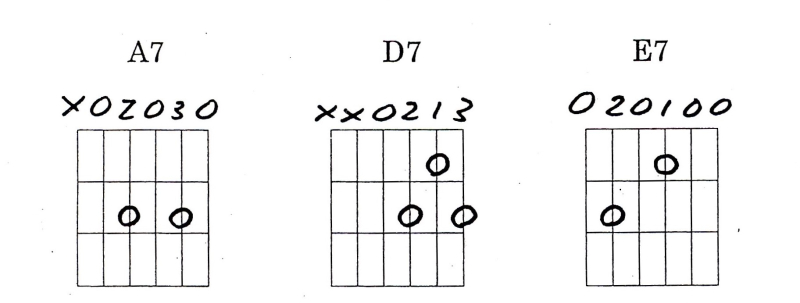
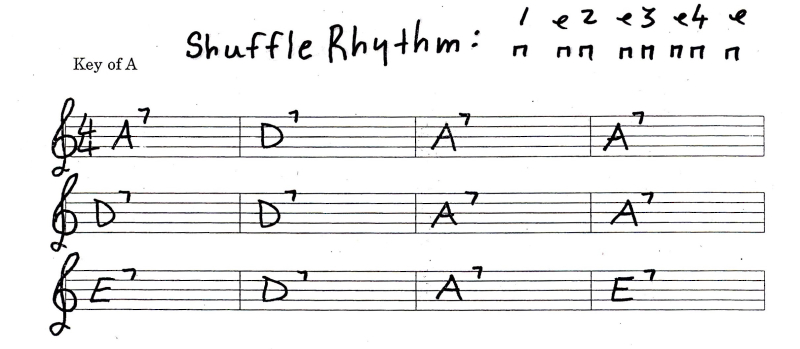
So, what is a twelve-bar blues? In its most basic form, it’s a chord progression that lasts twelve bars, with three four bar lines. The chords are all dominant 7ths, and they are the I, IV and V of the key. That would be A7, D7 and E7 in the key of A.* When you add a shuffle rhythm, there is no argument – this is the most common blues form. Below is a video on the shuffle. Use all downstrokes, as in the freehand scrawl in the chart above.
It’s incredibly useful to memorize the progression. The blues and rock and roll are somewhat improvisational in nature. To improvise, you can’t be sight-reading. They’re more or less opposites. To memorize the twelve-bar blues, it’s helpful to break it down. Think of the twelve-bar as a song with three lines of four measures. The first line is mainly A7. The lyrics of the first line are usually repeated in the second line, which emphasizes D7. The third line has the most chord activity and emphasizes E7. This is where the “hook phrase” will go. In our lesson, line one has what is known as the “Quick IV.” This a D7 chord that’s moved to in the second bar. It’s just as common to have four bars of A7 in line one, but it’s a little harder to count.
I recommend that you employ the chord fingerings as indicated. This facilitates an easy shift between all the chords, especially A7 to D7 and back. Take a look at the video below. Try to smoothly transition from one chord to the next. I only play one repetition of the progression at any one time, but I recommend playing it over and over without stopping, at least once each practice session.
Download Left Hand Fingering Closeup
You can use a straight 4/4 rhythm with all downstrokes, one to each quarter note, if you are just starting out. When you get that together, try the shuffle rhythm. It’s a 4/4 rhythm pattern where each quarter note is divided into a triplet. This equals 12/8. The middle note of the triplet is more often not played, so it becomes long – short – long – short – long – short – long – short and so on. This can also be thought of as one & two & three & four &. Most importantly, use your ears. Also, you should listen to some classic blues songs to get a feel for the shuffle. You probably are already doing this or you wouldn't be here reading this article. But some of my favorites include "Baby What You Want Me To Do," by Jimmy Reed, "Dust My Broom" by Elmore James, and "The Things I Used To Do" by Guitar Slim.
When I was just starting out, I made a lot of progress by taping myself playing this basic structure, and then jamming to it with the blues scale in A. The wonderful thing is that it fits so well, and right off, you're making music! You almost can’t go wrong. It’s a joy to behold. -Christian Botta
*Ah ha! The Blues can also teach you music theory! Nice, huh?
 On Practicing Guitar