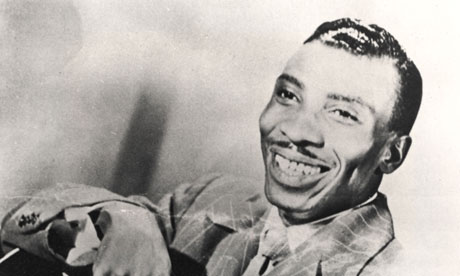
A hot summer night in Los Angeles, 1951. Ike Turner had recently waxed “Rocket 88,” in Memphis and Fats Domino’s “Blueberry Hill” was still five years off. With the birth of rock and roll at hand, T-Bone Walker probably figured he could experiment a little. And so, he recorded this eighth note boogie, married to a blues form with raging saxophones and we’ve got “Welcome Blues (Hey Pretty Baby).”
Aside from being a very catchy riff, the ‘rock & roll’ section of the tune, which opens the song and supports the leering, sleazy sax solo, makes for a good exercise in right hand picking and keeping up your momentum and concentration.
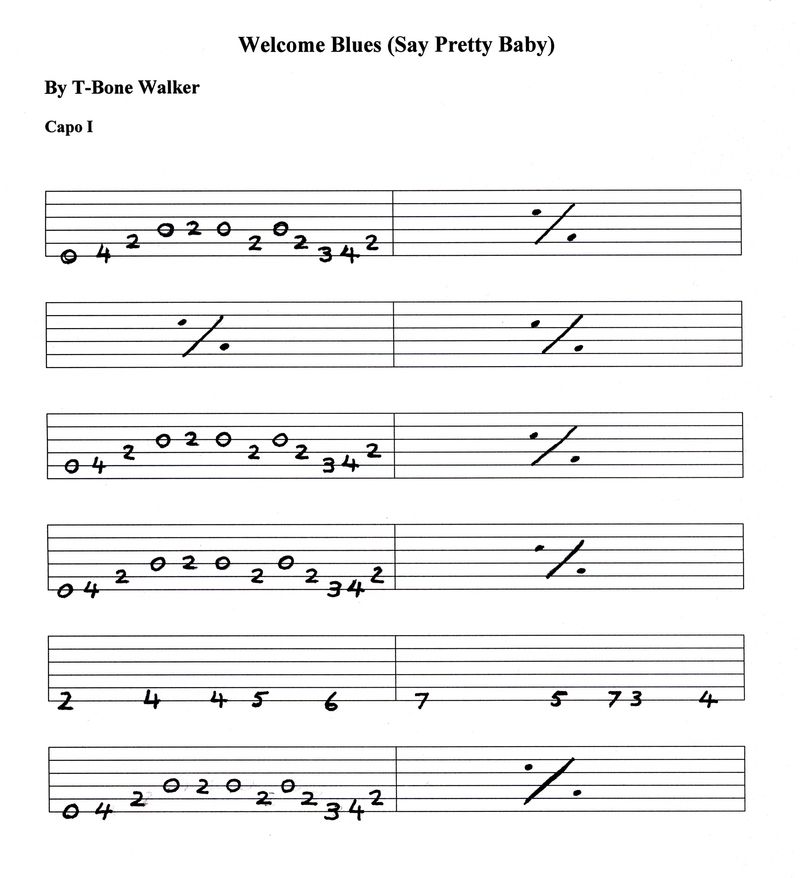
I recommend straight alternate picking, although I don’t always do this for various reasons. One is that upstrokes sometimes sound a little weak on the lowest bass strings. And in general, I don’t feel that sticking to a strict picking pattern will ever outweigh musicality. Music rarely does the same thing all the time. But in this case, it does.
Note: The repeat symbols in measures 2 – 4, 5, 7, & 12 are a valuable reading tool. Simply repeat the last written out measure; when new material comes up, play that. However, you have to memorize these patterns – the hand is quicker than the eye! If you have trouble keeping the tempo up, slow it down for practicing. To really get comfortable with it, practice until you can play it faster than the record.
Play along with the song. When the riff is not being played, feel free to wail along with the sax or over the vocals, although I would lay out during the stop time passages. How often do you get to play with such a killer rhythm section? Note also, the beautiful tone of the guitar and the catchy hook that comes in measures 9 – 10, utilizing space as a huge release of tension.
Another note: There are other ways to finger/arrange this riff on the guitar, perhaps utilizing only the E, A & D strings – try it, but remember, smoothness is key. Eliminating the G string adds fatness and consistency to the sound, but at the expense of ease of playing. Experiment.
The use of the capo may seem a little stiff to some. But, how many times do you see a picture of Muddy Waters or another blues slinger with a capo on their guitar? T-Bone often plays in flat keys, to help the horns sound their best. It can be a little uncomfortable to bend strings and improvise in the key of F with a capo on, but if you’re going to play the blues, both aspects are important to get used to. There are many great blues tunes in F, for example “My Babe,” by Little Walter. Capo I, and that riff sounds kind of familiar, doesn’t it?!
 On Practicing Guitar
Leave a comment