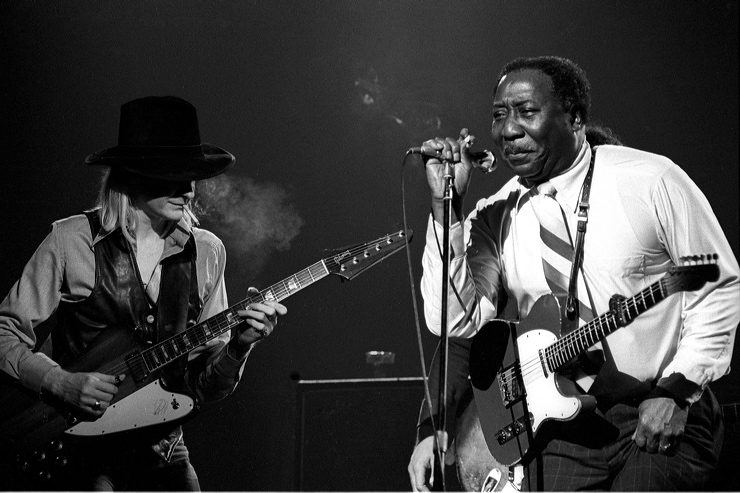
I’ve been planning a trip to Memphis recently and in my research I ran across an interesting New York Times article called, “Driving the Blues Trail – In Search of a Lost Muse,” by Rick Bragg. At the end of the article, the author includes a list of blues records that have been honored by inclusion in the Blues Hall of Fame by The Blues Foundation. Their choices inspired me to put together this list.
This is not the definitive ten blues albums by any means, but ten that I feel are absolutely essential for any lover or student of the blues to hear. Each of them has touched my life as a musician in some way. There are obviously many more, some of which are included on the Blues Foundation’s list. Most of my choices I’ve owned for years on CD, and some I have on LP. However you find them, every track is worth listening to. But if you must cherry pick on iTunes or whatever, not to worry – a cut or two from each would make an incredible play list.
I’ll follow up with a list of more essential blues albums at some point in the future, if I ever get out of these blues alive. In no particular order…
Elmore James, The Sky Is Crying – The History of Elmore James, Rhino
I’ve been listening to this one a lot lately, and I learned one of my first slide tunes from here, “Shake Your Money Maker.” Influential? I play much of my slide in open D – the key of ‘Money Maker.’ It’s like, ‘OK, whatever you say.’ The liner notes are amazing, too. Elmore James is name-checked by The Beatles and he was an influence on Jimi Hendrix, as well. He was one of the first guitarists to exploit the electric guitar as a sound source. The record features appearances by Sonny Boy Williamson and Eddie Taylor, and a woman screaming in the background as the solo begins on a single recorded live, “Cry For Me Baby.”
Sonny Boy Williamson – His Best, MCA/Chess
Little Walter – His Best, MCA/Chess
Although these collections feature two of the greatest blues singer/harmonica players and a wealth of classic blues songs, a bonus is the extraordinary guitar playing, with Robert Nighthawk and Luther Tucker (both records), and Louis and Dave Myers (Little Walter) leading the way. It almost makes me drool thinking of hearing them play with an old Gibson or Fender amp in a dangerous club somewhere on the outskirts of town…
Howlin’ Wolf – The Definitive Collection, Geffen/Chess
There are numerous collections that comprise the Wolf’s central material, but this album sounds terrific and includes most of his best tunes. Another CD or so will be necessary to get all of his best work, but this is a great place to start.
Jimmy Reed – The Best of the Vee-Jay Years, Vee-Jay/Shout
An excellent and brash sounding collection. Includes his awesome, first single, “High and Lonesome,” which is often and strangely absent from a lot of compilations. Jimmy Reed is the master of the blues hit and a prime employer of guitarists – his band and recordings often include three – can you make them out?
Robert Johnson – The Complete Recordings, Columbia
When I was learning to play blues and rock and roll in my early teens, I read an interview in Guitar Player Magazine with Johnny Winter, one of my biggest influences and one of the greatest modern blues artists, where he said, “If you want to play rock and roll, you’ve got to listen to Robert Johnson, B.B. King and Jimi Hendrix." I ordered a Robert Johnson LP, which I still have from my local record store, and I eventually took possession of it and listened as best I could. But I didn’t get what Johnny was talking about. In more recent years, I’ve come to understand what he was saying, and then some.
I often think that it’s one of music’s major miracles that Johnson managed to record this group of songs, when he could so easily have missed the opportunity due to the obscure nature of his lifestyle or just simple fate – he didn’t last much longer after cutting the sides. A number of these songs are in the repertoire of my band, most notably “Stop Breaking Down” and “Malted Milk,” a cover that I’m particularly proud of.
I was once hanging out with one of my students when a friend of his contradicted me by saying that Johnson’s playing – we’re talking recreating the tunes on acoustic guitar – wasn’t that hard. I have to say, I have never heard anyone sound anything like Robert Johnson. It is a simultaneously ferocious and deadly accurate axe that he wields. And his singing? Phenomenal.
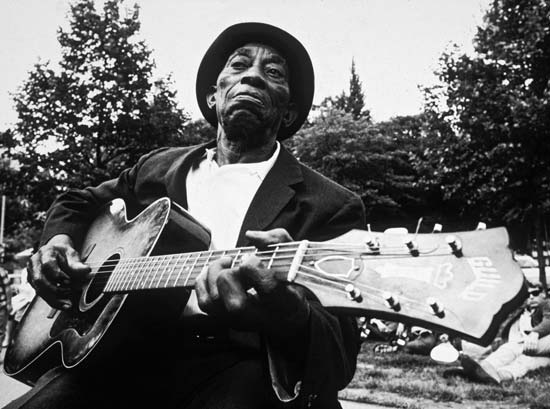
Mississippi John Hurt – Avalon Blues: The Complete 1928 Okeh Recordings, Columbia/Legacy
This is one of my personal favorite artists, and I learned many of his tunes off an album from his revival period, Mississippi John Hurt Today, on Vangaurd. I only got this record a few years ago, and I couldn’t believe I had never seen it. Another total miracle, and beautifully recorded. In 1928, John Hurt traveled to New York City and recorded this album for Okeh. He was homesick and skeptical of the big city, but he made a super record of his inimitable double thumbing, Travis Picking before anyone called it that, country blues stylings, with lyrics about sex, death, violence and God, all sung in a gentle and knowing voice that is a true one of a kind. He’s got some chops on guitar, too – no kidding!
B.B. King – Completely Well, MCA and Singin’ The Blues, Ace/Crown
The King of the Blues has so many records, it’s impossible to pick one. Most people cite Live at the Regal as a definitive B.B. King record. But it has never really touched my soul. On the other hand, when I first heard “The Thrill Is Gone” off of Completely Well, I immediately figured it out and started playing it with my band. This was at age sixteen. Much later a student of mine turned me onto the original recording of “Sweet Little Angel” that’s included on Singin’ The Blues. He had found it on a Mojo Magazine CD, The Origins of Eric Clapton or something like that. I started playing that song with my band and taught the fills and solo to anyone who would listen. The production on Completely Well is beautiful, and it includes the great studio ace Hugh McCracken on second guitar. Singin’ the Blues has kickin’ horn arrangements, fierce leads, and that awesome ‘50s atmosphere but in a way that is just not quite like anyone else.
Muddy Waters – The Best of Muddy Waters, Chess/MCA
Little explanation needed here. This gem covers the period from 1948 to 1954, when Muddy Waters could basically kick anyone’s ass that had the nerve to try. One of my favorite scenes in the awesome Chess Records biopic, Cadillac Records is when they show, numerous times, Muddy packing up his guitar case for a gig. He puts in the picks, he puts in the guitar, he puts in the gun… Twelve tunes, every one of them great. The circa '80s vinyl pressing sounds amazing.
Blind Willie McTell – The Best of Blind Willie McTell, Yazoo
I bought this album many years ago on LP and I recently replaced the destroyed vinyl with a nice new Yazoo CD. It’s exactly the same. Bob Dylan supposedly once called McTell one of the greatest blues singers. It’s not hard to understand, as his tenor voice is incredibly expressive yet so easy to listen to. His original version of “Statesboro Blues” provides a textbook example of how to revamp a song, ie when you listen to Taj Mahal and of course the Allmans, you can see how easy it is to ride on the coattails of a genius, if you get it just right. He plays a wicked twelve-string guitar and in his own words, he “drinks so much whiskey, he staggers in his sleep.” If I had a time machine, one of my first stops would be a street corner in Atlanta, circa 1927.


 On Practicing Guitar
Leave a reply to George M. Cancel reply