• Awesome Dancing Girl

    The moon was almost full as I walked the last few blocks to The Shrine. When I got there I ordered a Heineken at the bar and it only cost five dollars – I don’t know if it was happy hour but it was a good sign. My high school friend Eric Alterman had invited us, Saints and Sinners, that is, to be on the bill with his band The Sloe Guns for a night of music at this, one of my favorite clubs. Joining us on the bill was Citizen Sane. They play an R&B drenched style that suited us perfectly. Everything was set for this Saturday night extravaganza.
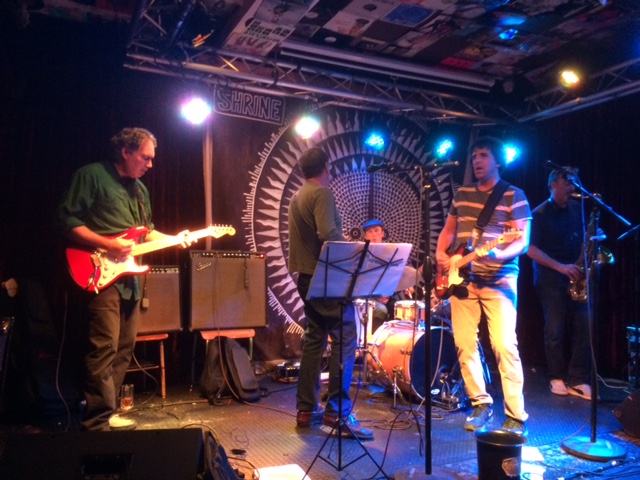
    Citizen Sane

    Citizen Sane

    It turned out to be a night of classic American guitars and Fender amps, featuring tight bands, old friends, and good vibes. Citizen Sane, led by Dave “Chap” Kaplan was up first and therefore it was a blast of brash Fender guitars that greeted me at the door when I arrived a few minutes late for the festivities. Citizen Sane is the kind of band that I would love to play with, but they already have a great guitar player in Clay Chalem. Oh, well…
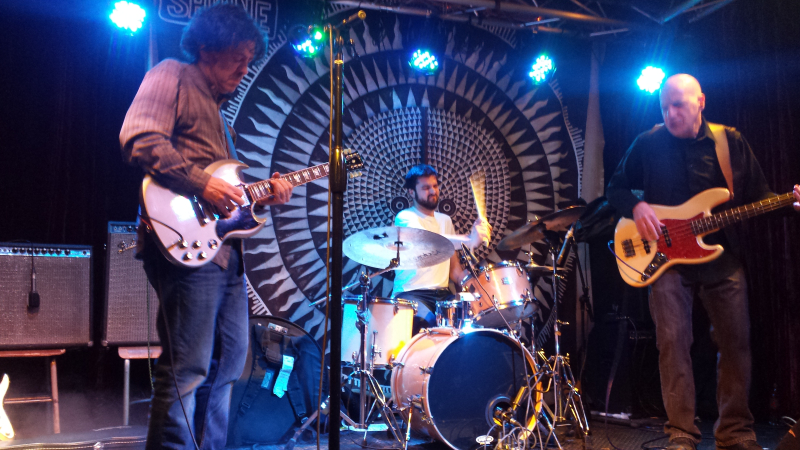
    20170311_202314

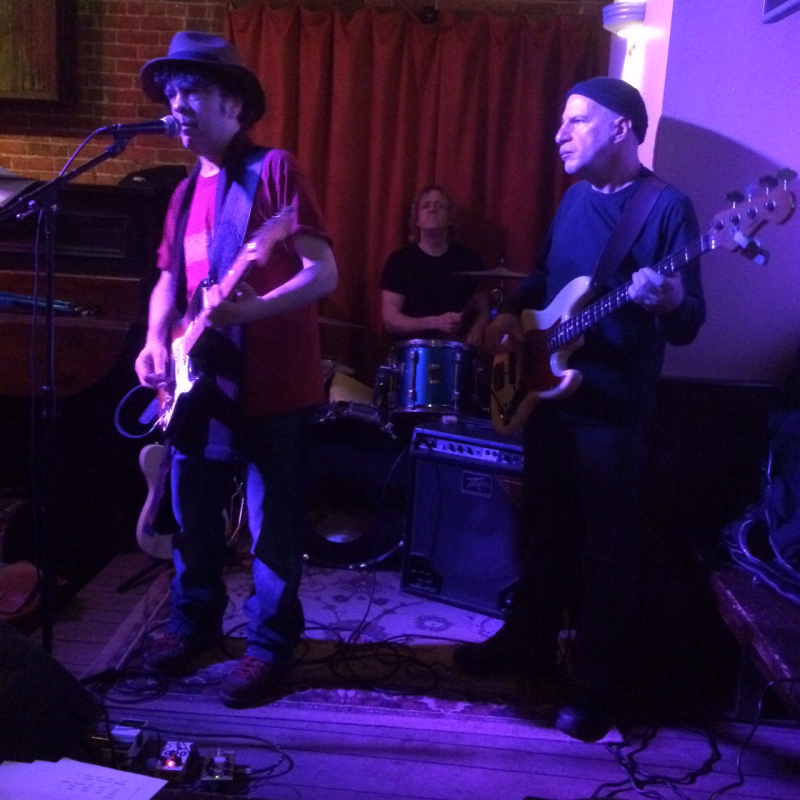
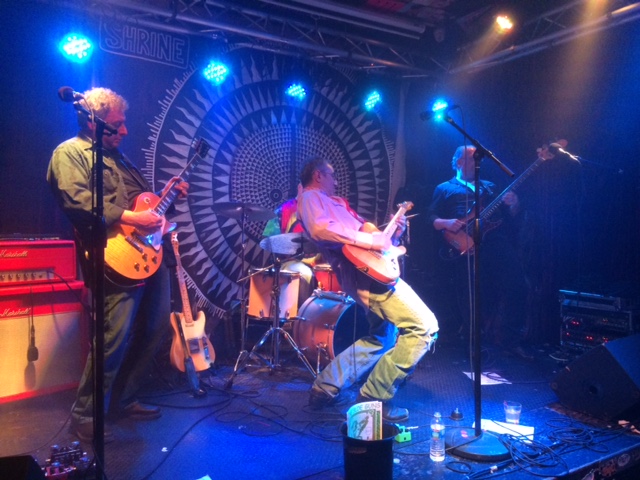
    Saints & Sinners L-R: Chris Botta, Daryl Cozzi, Dave Gerstein

    Saints & Sinners were up next and it was great to be back onstage, as you can see from the top photo. We’ve been in the studio working on our debut album and I was a little afraid that we’d suffer a little rust from the lack of live playing, but it was not to be. Bassist Dave Gerstein and drummer Daryl Cozzi were in fine form as per usual and the studio work has seemed to sharpen our focus more than a little bit. There was a good crowd on hand which made it all the more fun to crank it up and let fly. I especially enjoyed the feeling of playing the Fender Super Reverb that The Shrine keeps on hand – one of my favorite amps!
    Eric A at the Shrine

    The Sloe Guns

    The Sloe Guns, who headlined our portion of the night, did not disappoint. Eric Alterman on lead vocals/guitar and Mick Izzo on lead guitar/background vocals created a wall of sound with their instruments that probably would have impressed Ian Hunter himself had he been lucky enough to be there. A tiny bit of the lyrics in Sloe Guns excellent songs were lost in the shimmering crunch of guitars but it was a treat to hear Eric’s vintage Custom Tele going toe to toe with Mick’s Les Paul and red Marshall half-stack. Rick Sperber on drums and Rob Klein on bass and backing vocals rounded out the polished and for this night heavy sound of The Sloe Guns.
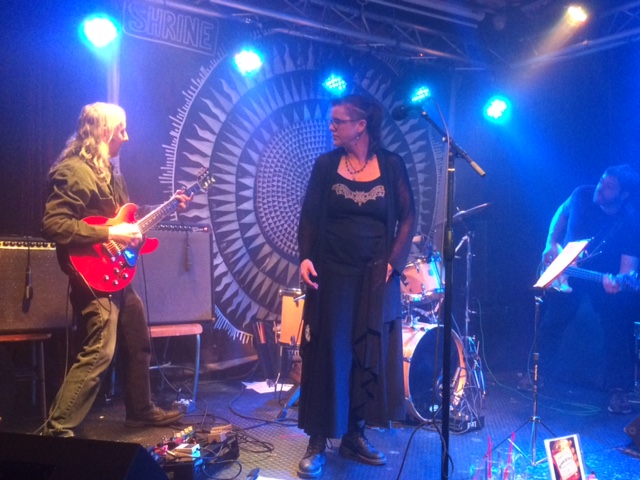
    Seeing Voices

    Seeing Voices

    But wait a minute! There was yet another band that actually complemented the evening’s theme. Really, I was almost shocked that there wasn’t a White Stripes clone, but Seeing Voices was there to save the day and provide an almost unheard of four bands in a row in a NYC club with at least bluesy, roots based guitar at their core. Their guitarist, Richard Hockstein was impressive with his smooth, classic semi-hollow Gibson sound. I wish I could have paid more attention to them but I was having too good of a time. -Christian Botta
    Back to Chrisbottaguitar.com

  • I'll Be Your Mirror

    Green has always been one of my favorite colors…

    Saints & Sinners are currently in Jeff Cook’s Bushwick studio working on their debut album. The record will feature ten tracks including about half originals, some juicy covers (Robert Johnson, Sonny Boy Williamson, Freddie King) and some instrumentals with ten tracks in all.

    Christian Botta was at the Underground Studio last Thursday laying down lead guitar tracks. The recording process began on January 7th with tracking at Virtue and Vice Recording. Eerily, there was a small snow storm, almost a year to the day that a blizzard prevented Chris from recording with Sleepless Nights.

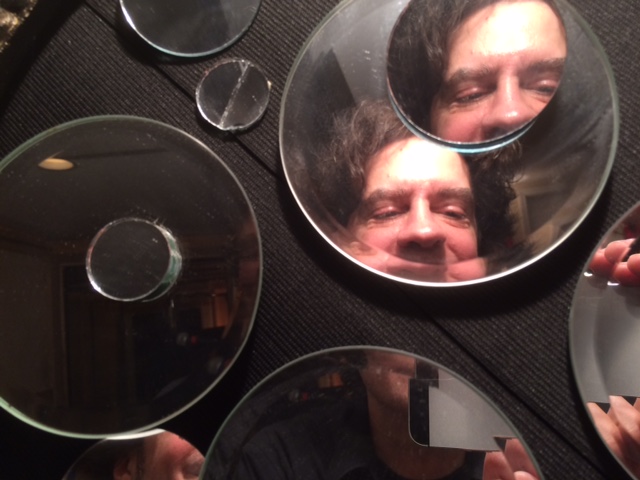
    Mirror I

    Some of the studio's amusements…

    The tracking at V&V was highly successful but Chris’ 2016 work with Mancie done at JC’s Underground was such a breeze that the overdubbing and mixing process was moved there. No sneak peaks of the tracks are currently available. The band is looking at a late Spring release with a potential single before that.

    In other Saints & Sinners news, join us at The Shrine on Saturday March 11th at 8pm where we will be opening for our friends the Sloe Guns, a great band with years of working together and the songs and sound to prove it.

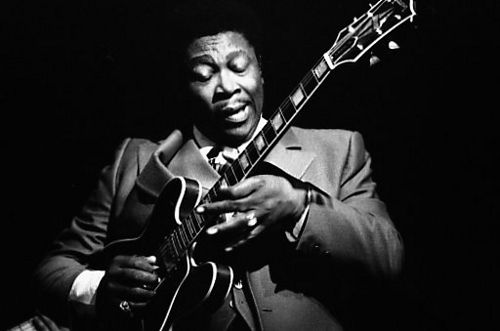
  • B.B.King

    The first finger vibrato, employing a rapid rotation of the left hand wrist, is an essential blues and rock guitar technique that is well worth perfecting. B.B. King is the true master of this move, and although it may look simple, the mechanics can be somewhat elusive for those who are trying it out for the first time. The key is that the wrist is driving the vibrato, but because it’s behind the hand and the guitar neck, it’s a little hard to see what’s going on. Up front, you can see the pinky side of the hand swinging out, and in B.B.’s case, it often appears to be fluttering like a little bird.

    What’s happening is that the wrist turns or rotates within itself – the forearm doesn’t move much at all – and this rotation makes the pinky side of the palm of the hand swing away from the fretboard and back. That motion in turn pulls the first finger down and back, which makes the string you are fretting go slightly sharp and then back to pitch repeatedly. This creates the vibrato effect. When the technique is properly employed, it’s smooth and effortless.


    Take a look at the video above. Note how the wrist and forearm are doing most of the work. The guitar does not move. Try to keep your wrist from moving too much side to side – it should turn within itself, a movement which in anatomical terms is called “pronation/supination.” Yup, I had a physiologist for a guitar student once upon a time.

    The lick I’m doing is very simple. It's in the key of A at the fifth fret with the notes A and C and it’s similar to the “Spoonful” riff employed by Howlin’ Wolf and Cream. BTW, a great source for this type of vibrato is Cream’s Wheels of Fire album, where Clapton is doing it all over the place, especially on the live version of “Spoonful.” I learned some of my first licks off of that extended jam and it’s probably where I learned this vibrato if not from watching my first electric guitar teacher, Terry. The second lick in the video is transposed to the key of E, where it’s played at the twelfth fret with the notes E and G.

    Practice slowly at first. Unfortunately, it can be a little difficult to control the movement at slow speeds but if you can do it slow, it will work when you speed it up. You should be able to see the string moving slowly down and back a millimeter or so. The amount of sharpness is negligible but can be varied – a quarter tone at the most. Bring up the speed as your comfort level increases.


    For an explanation from the man himself, take a look at B.B. King’s video, above. At one point the interviewer asks him if the string is moving up (towards the player) as well as down and B.B. hesitates before saying yes. I disagree. I think the string is only moving down and back, but that might be a difference in B.B.’s technique and mine. See for yourself. And get a load of that diamond ring he’s wearing on his third finger – now that will get your vibrato going! Below is one of my favorite B.B. King videos, where he plays “The Thrill Is Gone.” I think he’s a little excited because Gladys Knight is sharing the stage with him.


    For another example, take a look at the video in my “Hey Joe” lesson. The first finger vibratos are plentiful and include applying vibrato to double stops (two string chords). For third finger vibrato, the big bend and shake, take a look at my Hubert Sumlin, “Spoonful” lesson. Have fun! -Christian Botta

  • LIC Bar Saints & Sinners

    Monday, January 23 was very rainy and windy as Saints & Sinners headed out to the LIC Bar for our first show there. As I left the subway station and headed towards the river, the wind continually threatened to blow my hat off and lift my umbrella up to the heavens. I felt like a bolt of lightning was coming any second… I thought of… The Exorcist!

    LIC Rain

    I was worried that I had gone the wrong way. It was a grand relief when I saw the lights of the LIC Bar a block or two down Vernon Boulevard. The bar itself turned out to be as inviting and reassuring as those lights were, with warmth coming from both the radiators and the people within. The bar has an excellent sound, and I could hear a hint of Joni Mitchell in the harmony and keyboard driven songs of Amelia Cormack coming from the stage in the back.

    We played a set with Mark Feldman on drums and again the sound was terrific. I broke a string midway through, something that I don’t usually do. Was it some kind of a sign? Our bass player Dave Gerstein told some jokes during the interim to the obvious delight of the crowd. We finished off with a couple of Robert Johnson covers. You can access our version of his “Malted Milk” by clicking on the button below.

    Malted Milk

    We were followed by Felix Slim, a terrific finger picking blues guitarist and singer in the Piedmont style who also added harmonica and kazoo on a couple of numbers. Thanks to the Lady Migdalia who took the picture of us above and provided support and encouragement. A final good omen came when we got off the stage – the NY Rangers had beaten L.A. I will certainly be returning the LIC Bar sometime soon! -Christian Botta

    To return to chrisbottaguitar.com click here

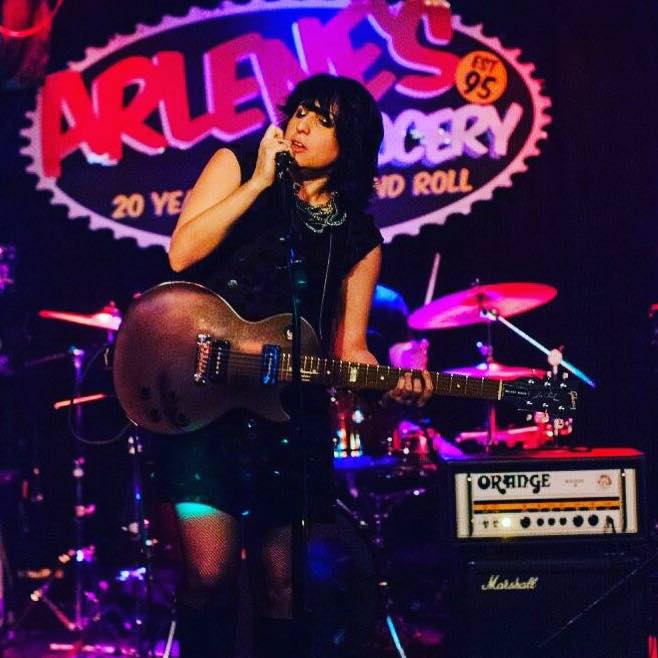
  • Andrea at Arlenes1
    When I got the gig playing lead in Mancie in December, I was a bit unsure if I could do it right after ten years removed from my last alternative rock project, Cargo Culte. I had some ideas that I wanted to use, namely I had fallen in love with Joy Division over the years and I heard an element of PJ Harvey, who I like a lot, in Mancie’s music so these were touchstones. But you don’t want to sound like a pastiche of all the coolest and most successful bands from ten, twenty, or thirty years ago, do you? Amazing how Joy Division stills sounds modern after almost forty years, heh heh…

    I made lead sheets for all the songs, an eight song set that we would play at Arlene’s Grocery. A bump in the road came when I found that a bunch of the songs were recorded in Eb and the rest in E Standard tuning although the band plays in Eb on stage. I corrected my charts and used a standard tuned Telecaster to practice those tunes and an SG tuned a half step down for the others.  I was working off of mp3s and using headphones – the internet age! – not my favorite way to practice but I’m getting used to it…

    While I was working up the songs, one that gave me trouble initially was “Happiness (Everything is Everything).” I got the skronking punk/funk rhythm idea, but where to go with the chorus, which had these big, slow chords? I finally hit upon the idea to play the chords as octaves and move them in an upwards direction instead of down. I also did a kind of tremolo, repeated note picking on the octaves. (see video above) I also took over the lead at the end, which Andrea had been scorching with a wah-wah pedal. That's me, Andrea Fischman on guitar and vocals, Mark Feldman on drums, and Sharon Fischman on bass, L-R. 

     “Fire Away” (see video below) is one that I had a hard time getting into the groove with, that is until I started to double the huge melody in the chorus. I went for a Mick Ronsonesque, sexy bent-note glam type of thing, a kind of thing that I love. That style could carry through to the bridge, as well, where there is a jaunty power chord stomp that includes a major scale riff leading back to the next phrase. Very Mott the Hoople, one of my favorite bands. At least in my interpretation…

    There were some cool effects on Andrea’s record, using wah-wah, delay, flanging maybe but definitely some modulation effects. I ultimately decided on a Maxon Chorus, Carbon Copy Analog Delay, Fulltone OCD Overdrive Pedal and Boss Tuner. I don’t like to use too many effects if I can get away with it because I think it can dilute the overall tone. No more than six unless it’s a three hour, cover gig.

    The piece de resistance was my Marshall JCM 900 50 Watt Head which I had just gotten completely tuned up. The question of course would be how to set it. My initial temptation was to set the master volume very high and the gain and preamp low but that seemed a little too clean although totally beautiful. It was also ungodly loud. I then moved the master down and the preamp up. There was a rainbow of tone in there, just all kinds of nuances – gritty, smooth overdrive, crunch and all the different colors of the guitar came through. I use all three pickup positions – it was a 2014 Gibson SG “Standard ’61,” – and each setting on the guitar sounded very different. What a pleasure! Unfortunately, the sound mix left something to be desired, unusual for Arlene’s Grocery. All in all a really fun gig though, and a great experience! -Christian Botta

    Click here to return to Chrisbottaguitar.com

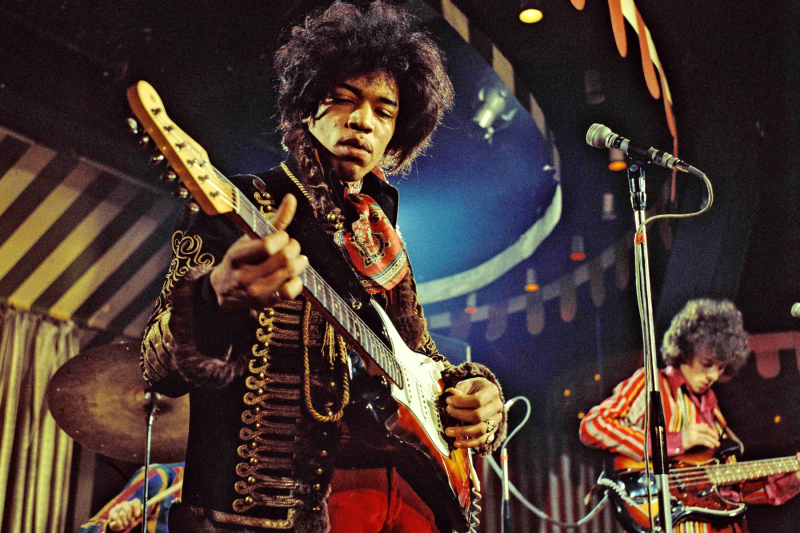
  • Hendrix with Military Jacket

    Jimi Hendrix’s solo in “Hey Joe” is a lesson in how to play ‘greasy’ – the style where articulation effects with exaggerated emotion take precedence. Many of the essential blues rock techniques are used and they’re delivered in a hot and heavy style, often in combination or one right after the other. You can learn a ton by mastering this solo and its techniques!

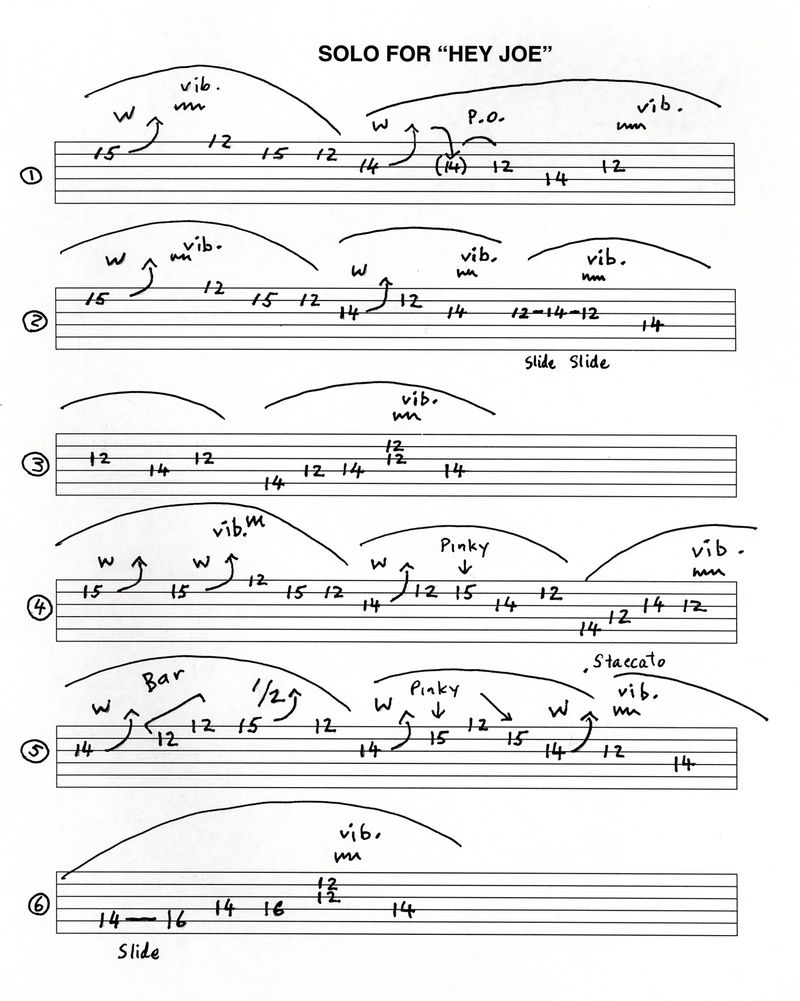
    The solo begins with a whole step bend capped by vibrato. This is one of the hardest techniques to master, but you’ve got to give it a go. That portion of the lick is followed by a descending run that includes a third finger bend and release followed by a pull-off. Jimi probably adapted this lick from Guitar Slim’s "The Story of My Life" (see video below) adding a bit of Hubert Sumlin’s “Spoonful” vibrato upfront.


    You can see a ‘how to’ video for the bend with vibrato from my blog here. Essentially, you’ve got to bend the D at the fifteenth fret up a whole step and add vibrato. I recommend copying the sound of other great player’s vibrato of this type. This is a good place to start.


    A clean, strong pull-off is absolutely essential to getting the bend and release plus pull-off lick in the first line of the solo. OK, so we’re only seven notes into the solo – still with me? The term pull-off is somewhat misleading. Many people try to execute this move by pulling the finger up and away from the string. This will only serve to mute the next note. You have to pull the finger down, actually squeezing the string almost into the fretboard, and then circle back to be prepared for the next note. It’s good to practice doing them VERY slowly. Think of it as plucking the string with your left hand finger – you should be able to make a sound without picking.

    The solo makes abundant use of first finger vibrato. This unique vibrato is done by rotating the fretting hand wrist without moving the forearm laterally and keeping the elbow in a fixed position. The hand swings down and back with the index finger pulling and releasing the string very slightly, only a millimeter or two. BB King is the master of this technique but you can see me doing it on all the first finger vibrato notes in the video (always a G or G/B double stop at the twelfth fret).

    Hey Joe Solo Tab Blog Post

    All of these techniques are used in just the first line. You can see how the term ‘greasy’ applies. If we jump down to line five, we see that it closes with a whole step bend that ends staccato or short but then jumps to a first finger vibrato on G at the twelfth fret. The key here is to learn to do each articulation technique, and then put them into action with real music. This solo provides a major opportunity that will point you towards what needs to be learned and whether or not you’ve gotten it down. Just break it into component parts and then put them back together.

    When I started my blog in 2015, my first post was an analysis of Jimi’s “Hey Joe” solo, from the perspective of melodic structure and phrasing, and I recommend that you take a look at it if you’re interested in learning the solo. I could discuss Jimi forever and in fact I wrote my master’s thesis about him. There is still more to discuss about today’s topic but most important of all is to shed it and don’t give up. It is one of those unusual compositions that’s accessible to an intermediate player yet will keep advanced players on their toes. It’s the perfect vehicle to take you from one stage to the next. -Chris Botta

  • Chris at Map Room I

    The end of the year always makes me excited. I love the fall and always look forward to January, where a new year awaits. Yes, there is trouble ahead. But we can’t take it lying down. We’ve got to boogie.

    I’ve got some cool shows coming up and I just want to let you know that everybody’s invited. Saints & Sinners will return to the Map Room at Bowery Electric this coming Tuesday, December 6th at 9pm. We seem to have caught on there and we’re looking forward to returning but we need to boost up these blues! Let’s pack this tiny room and move on up to the big stage – C’mon! The Map Room is located at 327 Bowery, right around the corner from where I get my amps worked on by Blackie Pagano.

    Speaking of which, I just got my Marshall JCM 900 back from Blackie and I’m itching to fire it up. By happystance, I’m going to be playing a show with Andrea Fischman’s band Mancie at Arlene’s Grocery on Thursday, December 8th at 9pm. I used to play at Arlene’s fairly often in the mid-aughts, and I loved the place the first time I ever set foot in it so I’m pumped to be getting back on that stage. You can check some recording I did with Mancie on the video clip below.


    Finally, Saints & will be heading into the studio to wax our debut in January. Talk about kicking the New Year off with a bang. And we’ll be doing it at the highly regarded Virtue and Vice Studios in Brooklyn. Talk about a match made in heaven! Happy Holidays and we hope to see you at one of our shows! Good luck and Boogie On!

  • Jimmy Page Stockholm 1969

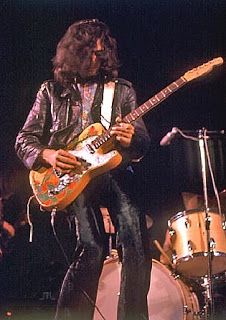
    A pounding hard bop record caught my attention in a café one time. The sax player was wailing away on a repeated figure and I thought, “Ah, there’s someone playing Jimmy Page’s favorite lick again.”


    If you listen closely to this tune, after around the three minute mark, sax player Joe Henderson will actually use the lick in question. It's dynamite, baby!

    Although I had been listening to hard bop for a long time (ie Coltrane Plays the Blues), I never fully understood what the style meant. The name especially had me Confused. More recently, I’ve been digging trumpeter Lee Morgan and some helpful critics hipped me to what was going on. Essentially, hard bop is a move away from both cool jazz and bebop, with a return to the blues roots of jazz. In hard bop, there is a shift from the cerebral elements and less emotional playing of the cool style, and a lot of wailing on the horns and pounding away on the drums. This includes the repetitive statement of a single bluesy lick – aha!

    My favorite rendition of this lick as played by Jimmy Page is on the song “Thank You” on the Led Zeppelin BBC Sessions double CD released in 1997. In a majestic ‘slow song’ type solo, Page repeats the lick numerous times while the chords change behind him for the last part of the solo. I always hear this solo as being quite ‘stagey’ – you can almost hear the spotlight swing over to Page just before he starts to play.

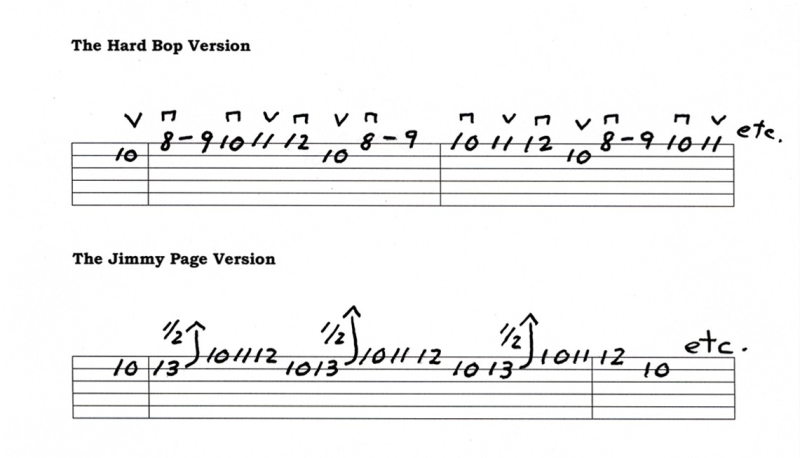
    The lick itself is a quick run up from the tonic to the dominant note (omitting the second), with chromatic notes in between: A – C – C# – D – D# – E. There is one slur or bend, between the notes C and C#, which can be thought of as a ‘blue note.’ I’ve included examples in video and tab of the way Page plays it and in a jazzier style. You can use the same right hand picking on both versions.

    Jimmy Page Hard Bop

    Some Words About the Rhythm

    The fact that the lick is a repeated six note figure makes for some interesting rhythmical effects. Observe how the accent shifts within the bar. The lowest note (the tonic) is a pickup note but the slurred or bent note has the most emphasis. In “Thank You,” the melodic repetition on top brings the slower harmonic rhythm out front, which is a trick that can be applied in many situations. Here the chords change once each bar:  D – C9 – G/B – D. The slur or bend allows you to use one repeated down-stroke, which keeps the accent in the right place, which is moving, man. Remember that a bent note is actually two notes – the note that you start out on and the note that you end up with.

    Jimmy Page is one of my top three favorite guitar players, ever. Beyond the epic sweep of his music and his sophisticated writing and production skills, the man can really take a solo. Even his solos that don’t get as much attention are wicked and memorable – think “Black Dog.” I clearly remember one of my first guitar teachers showing me a lick and saying, “This is one of Jimmy Page’s favorite licks.” I could play it AND remember it. Maybe that’s one of the elements of his playing that Led to so much imitation. It’s easy to cop a few of his licks and off you go. But to play like Jimmy Page is another story altogether. -Christian Botta

    http://www.chrisbottaguitar.com


  • Low Society

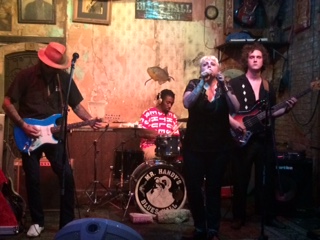
    Low Society Live at the Blues Hall on Beale Street

    During a trip to the Memphis area that included Clarksdale and Avalon, Mississippi and further afield, I saw Sturgis Nikides play with his band Low Society at Blues Hall on Beale Street. I was impressed with his guitar playing and Low Society, which is fronted by Mandy Lemons, Sturgis’ wife and a force of nature on blues queen styled vocals. I got to know Sturgis a little bit through the seriously legit slide guitar group on Facebook and when I decided that I was going to start doing interviews on my blog, he was an obvious first choice.

    Sturgis is known for playing slide but ironically, when I saw Low Society, Sturgis was in standard guitar mode for that set, which was mainly a tight, riffing and rhythmical supportive style. I later saw and heard his slide work, which impressed me further. Sturgis hails from Brooklyn, NY and he escaped the notoriously difficult NYC music scene to find something that is perfect for him. As he tells it…

    “We left NYC in January of 2012 right after New Year’s. Mandy and I were 100% committed to Low Society and I needed somewhere where we could afford to do that successfully. We figured going south was our best option. She’s originally from Texas. We went to Houston. I was having a problem finding simpatico band members, ie the rhythm section which is what I needed. By happy coincidence we ended up in Memphis in April 2012. We went to play the Juke Joint Festival in Clarksdale, MS. Our manager at the time suggested that we go visit Memphis.

    Sturgis Just iNsane

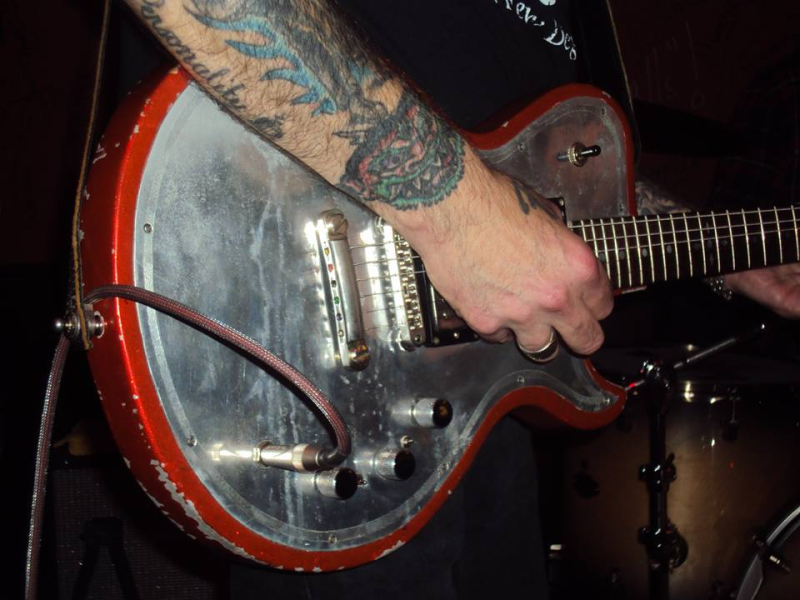
    Sturgis' Justin Sain guitar

    “He brought us to Memphis and put us up in a bed and breakfast. My idea of site seeing is to go on to CL and find out where the local blues jam is. We went to a blues jam at a place called Kudzus. We got onstage and there were people coming on to the stage to shake our hands and say, ‘Welcome to Memphis.’ It blew my mind. We took an apartment and drove back to Texas that week and got our stuff and came back up and we’ve been in the same spot ever since. It’s been a great experience.”

    Sturgis says that he was “attracted to the sound of the slide guitar by around age twelve.” He uses a flat pick to play slide, eschewing the Duane school and approach that includes Derek Trucks and his many followers who play strictly with bare fingers. “I tried going the Johnny Winter route, obviously, thumb pick and I never successfully made the transition. I felt very clumsy doing that. My observation has been that guys who do that Travis picking thing are the most fluent and I’m jealous of that.

    “One of my favorite roots guitar players if that’s what you want to call these guys is a gentleman from Texas named Mance Lipscomb and he’s famous for a style of guitar playing known as ‘dead thumb.’ Lightning Hopkins – same thing where they’re able to have their thumb play on the four while their index finger and middle finger are playing something entirely opposite and I have had a devil of a time making that happen.

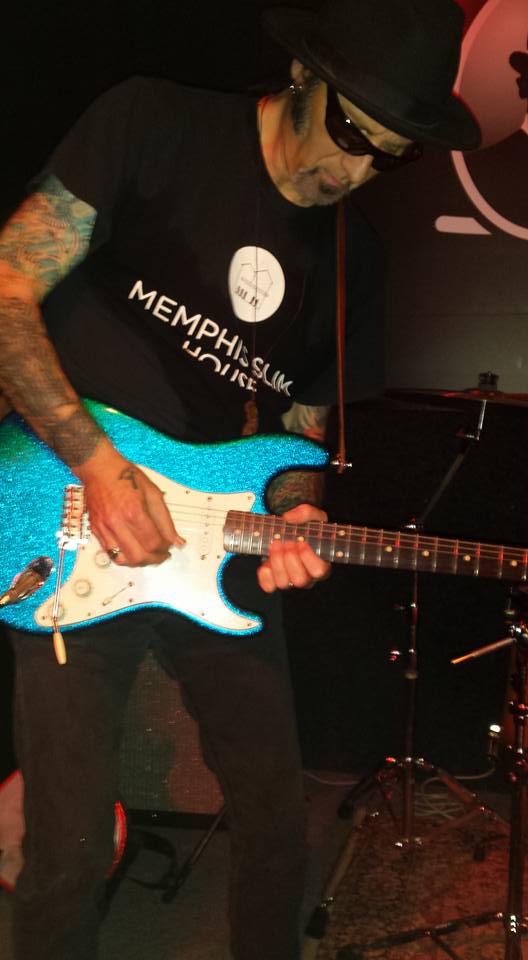
    Sparkle Strat

    Sturgis hits it with a blue sparkle Strat

    “But I’m able to pull off a very convincing rendition of that with the flat pick. I developed a really fast technique so I can play the thumb part and go back and forth to the top strings. The king of that style is Blind Blake. I’ve been trying lately as part of my practice routine to learn Blind Blake numbers.” Asked further about his practice routine he elaborates that he likes “straight up improvising for hours on end, you know, variations on a theme type of thing, I can really get into that.”

    Sturgis plays mainly Strats and Teles and a Justin Sain model is his main slide guitar. He favors a glass slide and he wears it on his pinky, using D’addario 11-49 for slide and 10-46 for standard guitar. His main amp the last two years is a 1961 Fender Bandmaster with three ten-inch speakers. Found in North Miami in the early ‘90s, he describes it as a transitional model with a tweed sound in one channel and a magical blackface vibrato sound in the other, a “Jimi Hendrix/Robin Trower Univibe” sound. He adds that he loves the Lewis Electric Danny Gatton amp for its “bell like piano lows and really creamy top,” and calls it a “super clean, beautiful sounding amplifier.”

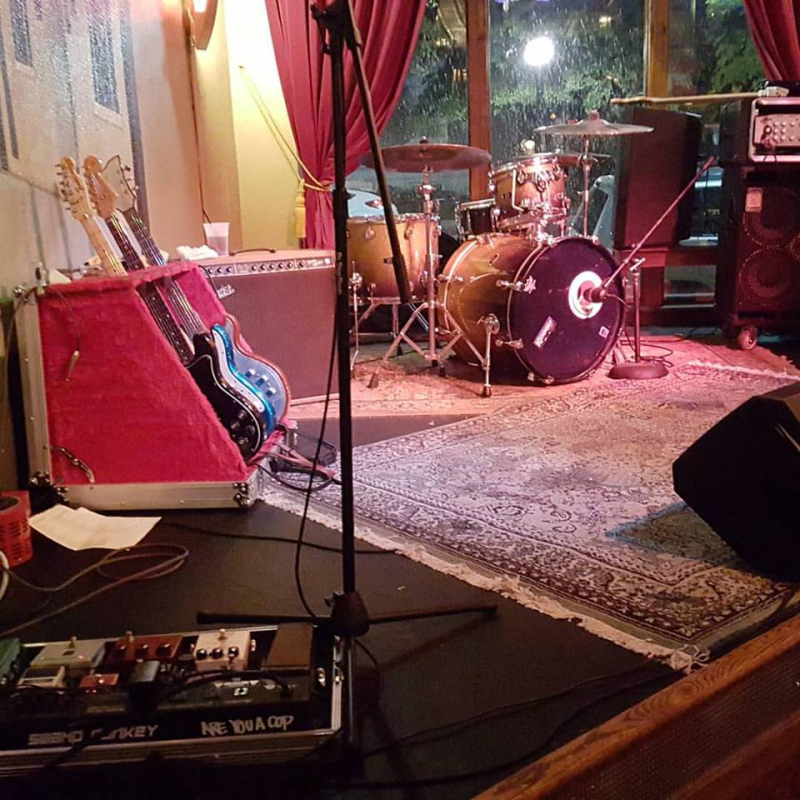
    Low Society Little Rock

    Gear onstage and ready to go in Little Rock, Arkansas

    Although he has recently been including a wah-wah pedal on his board for the many live gigs that he does, he is not a pedal junkie, stating, “I definitely go for a cleaner sound these days than I have in years.” His overdrive pedals of choice include the Clark Gainster, which he describes as “more of a boost,” the Clone Kline, and some original Tube Screamers from the ‘80s that he owns.He emphatically replies to my last equipment inquiry that he “doesn’t use compression,” unlike many slide guitar kings, including Bonnie Raitt, Lowell George and Sonny Landreth. He favors open A and E for his slide excursions.

    Low Society recently returned from a tour of the Netherlands and Belgium and I hear that they’ll be heading back into the studio soon. You’ll definitely want to check out the title cut of their latest album, You Can’t Keep a Good Woman Down. To hear Sturgis work out in standard guitar mode on a Strat, check out "This Heart of Mine," which features a beautiful vocal performance from Mandy, as well. But if you happen to be in the Memphis area, the best thing you can do is to see a local performance by Low Society or Sturgis in one of his side gigs, which are happening all the time. As he says proudly, “I feel honored to be here. Every time I step on a stage on Beale Street with a guitar in my hands, I feel like I’m participating in a legacy that goes back a hundred years.” 

  • Chris Recording Session with Andrea

    Two Thousand Sixteen has been a crazy year. But my version of it took a huge upswing when I got the chance to work with my former guitar student Andrea Fischman on her new recording with her group, Mancie. There were a few songs that needed lead guitar, and Andrea gave me the call. I readily accepted, embracing a chance to rock out and get creative on two of her hard-edged originals that are infused with melody and atmosphere. It was a bonus that Mark Feldman, who played drums with me in the Anodyne Blues Band for over a year, was behind the kit.

    I set about working up my parts, charting out the songs “Moon and Stars” and “Love Spares.” I didn’t color code my charts like Robert Trujillo in Some Kind of Monster, but the thought occurred to me. I was enjoying myself. The basic tracks had already been recorded so the overdub session took place in the studio of a very talented engineer named in Jeff Cook, located in the basement of his Bushwick apartment building. The studio itself was fascinating, one of the most meticulously put together small studios that I have ever seen (pictured above – Photo by Andrea Fischman). 

    ANDREA_MANCIE_MEDIA_ROOM

    Andrea performing with Mancie

    I played my 2014 SG ’61 Standard and used Andrea’s 30 watt Orange tube head into a small Marshall (one twelve) cabinet. That combination provided a raucous and rich tone but I wanted a smoother sound with more gain so I added an overdrive pedal in between the guitar and amp. On “Moon and Stars,” I was going for a slightly more aggressive sound so I used a Fulltone OCD. I used the bridge pickup. I thought to switch to the middle or neck pickup for “Love Spares,” but Jeff wanted to keep me more in a higher frequency spectrum and requested that I not add too much bass. So, to change the sound a bit, I switched out the OCD for my Boss OD-3, which has a warmer, sweeter tone. It worked. For the upfront emotions of “Love Spares,” I got a more melodic sound, which was good because I was playing off of and around Andrea’s vocal. I loved the way Jeff was making the guitar sound in the mix, as there was an immediate textural presence to what I was playing. I had been wondering how to fit in with Andrea’s full and heavy rhythm guitars. The tracks are below, so please give them a listen.

    Moon and Stars


    Love Spares

    To top it all off, I got the nod to play lead guitar with Mancie at an upcoming show they will play at Arlene’s Grocery. I used to play there fairly frequently and I love the room and the sound and everything about it. It’s great to be back playing and recording some big rock and hitting it live in a cool room, no less! The show is on Thursday, December 8th. Thanks Andrea!