• Sleepless Nights Outside The Lair 030816_Crop

    Sleepless Nights is in the midst of completing their first demo and we thought we would share this tune with everyone. It’s the Stones’ “No Expectations,” (The link is below – just click on it) a song that I’ve been playing forever. At a rehearsal not that long ago, we tried a kind of ‘he said – she said’ approach, and folks seemed to like it. 

    We have a gig this Sunday at the HiFi Bar. Unfortunately, Ellen Croteau, our wonderful singer and guitarist, is going to South By Southwest and won’t be able to make it. Damn! Have fun, Ellen!

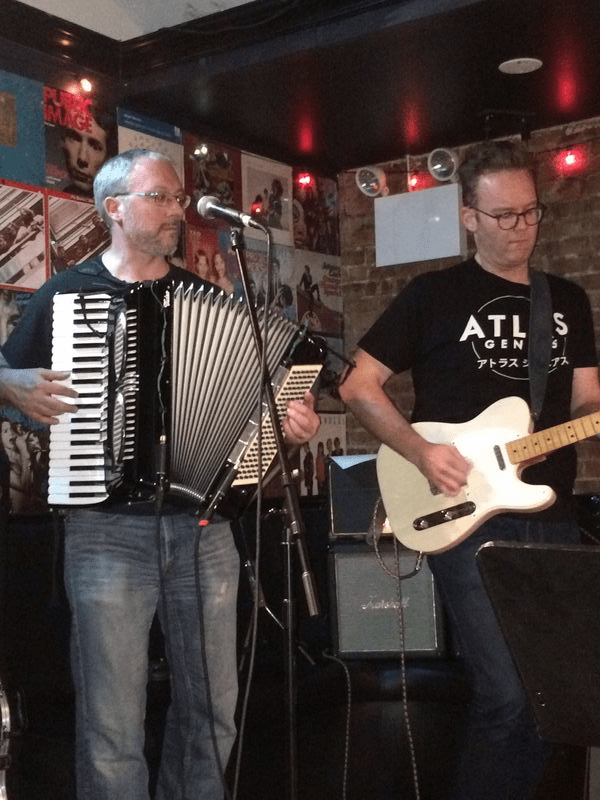
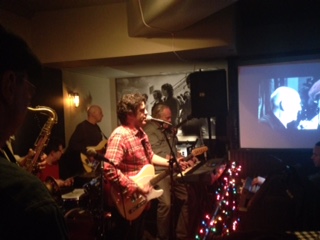
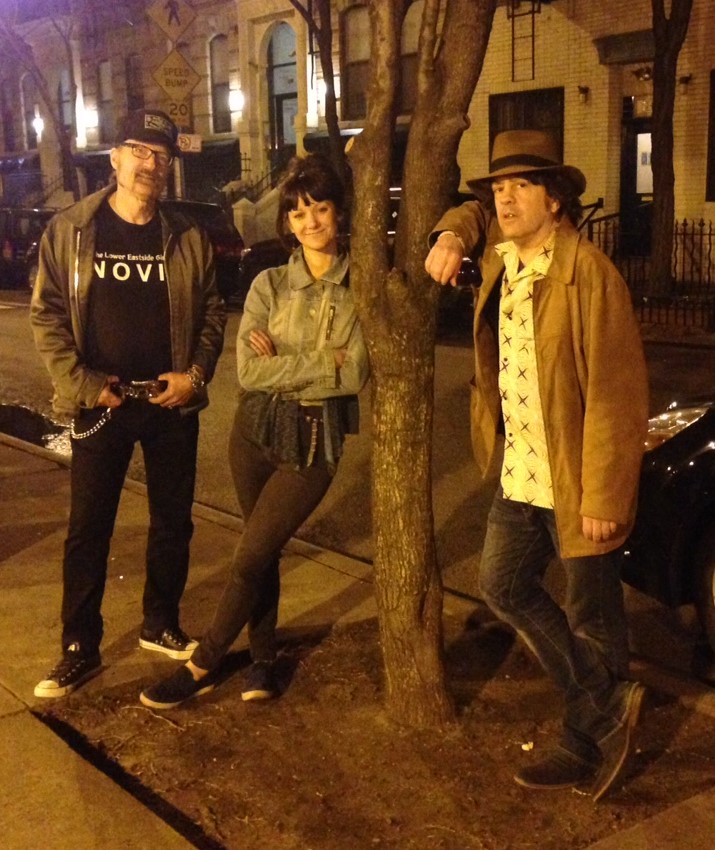
    That leaves Ron Raymond (left above) on pedal steel and vocals and Chris Botta aka myself on guitar and vocals to help open the show for Daisy Anabelle at the Sunday Sessions, brought to you by Ann T. Maim and her band Poorcolin (also appearing). Sleepless Nights goes on at 7:45pm. As you know, Gram Parsons will be turning 70 this year so come out and let's help make this a big year for Gram!

    The HiFi Bar is located at 169 Avenue A and entry is free. They have really nice drinks on hand and the vibe is very friendly. As they say in Copenhagen, it's cosy! Thanks to Edie Nadelhaft for the photo.

    No Expectations


  • Les Paul Classic

    After years of gear deprivation due to a constellation of complex financial and psychological factors, I’m finally making some welcome additions to my toolbox. I started out playing on a 70s hardtail Strat through a silver face, master volume twin, so you can imagine – I always figured you get the tone out of your hands. If you couple this with my upbringing – my parents were born in the Great Depression – as much as I want to have lots of cool gear, I’m pretty acquisition challenged.

    Weber Speaker

    But recently, I’ve begun to turn things around a little. I installed a Weber Ceramic 1225 “Greenback” in my Fender 65 Deluxe Reissue, while also replacing the power tubes with Tung Sols. The effect was immediate – warmer and with a lower breakup threshold and more attractive overall texture.

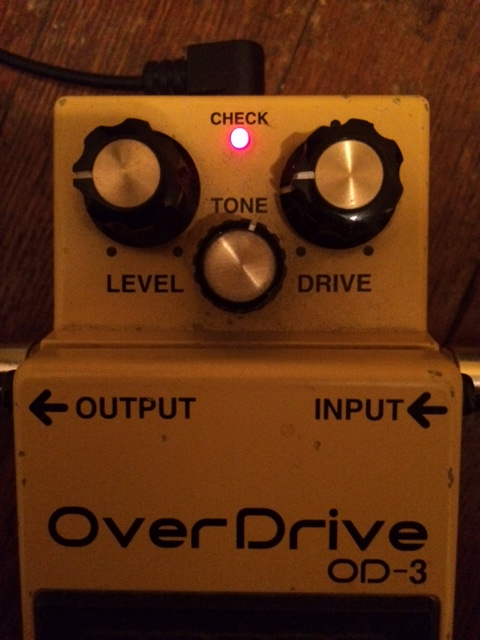
    Boss OD-3

    I started to get excited about the sound I’m getting out of my Les Paul Classic (top) again. With a Boss OD-3 set quite low, the aftermarket 57 Classic in the bridge of the LPC really started to sound sweet. I am working on “The Things I Used to Do,” by Guitar Slim, and all of these elements contribute to a decent approximation of that sweet 50s Les Paul sound.

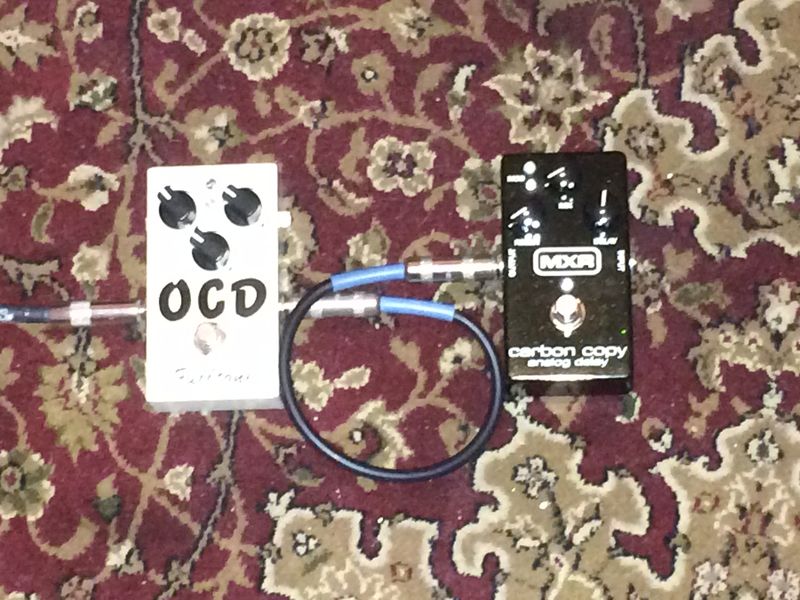
    OCD-CC

    In the process though, a sad fact was reconfirmed. The Deluxe Reissue just doesn’t take distortion pedals well. I finally broke down and bought an OCD, even though I have both the 69 and 70 Fulltone Fuzz pedals. I knew they didn’t work with the Deluxe, but even though the OCD sounded great in the store through a Deluxe with a Celestion in it, the dreaded fizzy-ness of the Distortion-Deluxe combo was evident when I got it home. The softness of the OD-3 is what makes it work with this amp. On the other hand, the MXR Carbon Copy that I bought sounds great, with a liquid sound on the Deluxe. No surprise there.

    SG I

    But the grand gesture of all this is my purchase this week of a 2014 Gibson SG Standard 61. I love SGs, but I only ever owned one – a second hand ‘61 reissue back in the ‘90s. Even though the neck went south and I had to sell it after six years, I didn’t lose any money. You would wonder why I don’t continually buy and sell gear like everybody else. This time, I was really looking for a Standard or a real 1960s SG. But I happened upon this axe at Guitar Center, a place I rarely frequent, and I got a great deal. It has two 57 Classics and is really loud and bright. I was originally put off by the color but I love it now. The guitar is beautifully resonant and balanced. It’s a joy to play.

    An ongoing project that I have is a Squier 51 that I’m switching out the pickups on. I’m putting a Duncan Quarter Pounder in the neck and a Gibson 500T Humbucker (out of the Classic) in the bridge. I’m awed by all these folks who mod their guitars, and I’m hoping to join their ranks at least on some small level. Keep on pickin'…

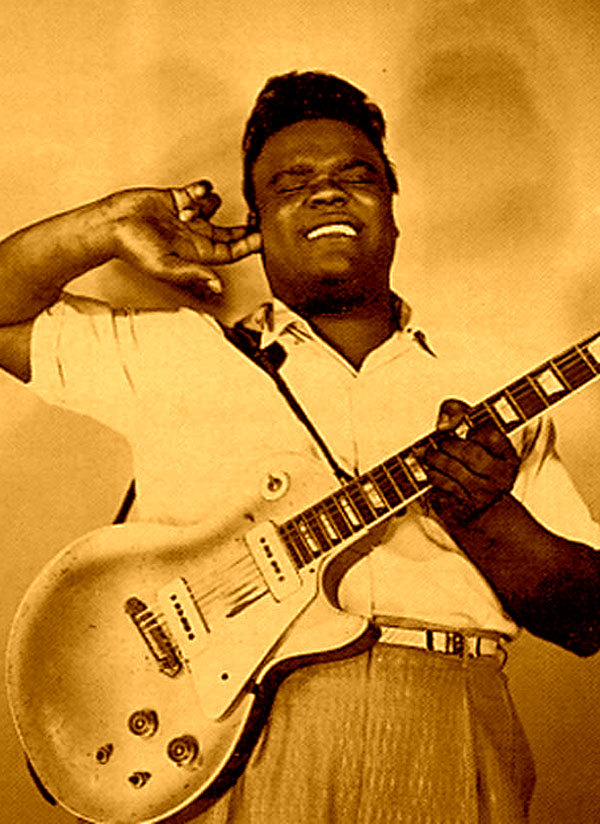
  • Freddy King Les Paul

    Freddy King or Freddie King? No matter how you spell it, this funkiest member of the three Kings is known for his smoking instrumentals. And if you’re contemplating learning one of them, my vote goes in for “The Stumble.” Here’s why: “Hideaway” has already been covered pretty definitively plus, if you learn The Stumble, you can easily pull together that number. “San-Ho-Zay” IS super funky, but I’m planning to shed that one so, please – don’t steal my master plan!

    But the killer centerpiece lick in sixths and interesting chord progression for improvising are the real reasons to learn The Stumble, not to mention that it’s really memorable and tuneful. It’s a live staple, but I have yet to hear a really groovy, scintillating studio cover. Maybe yours will be the one.


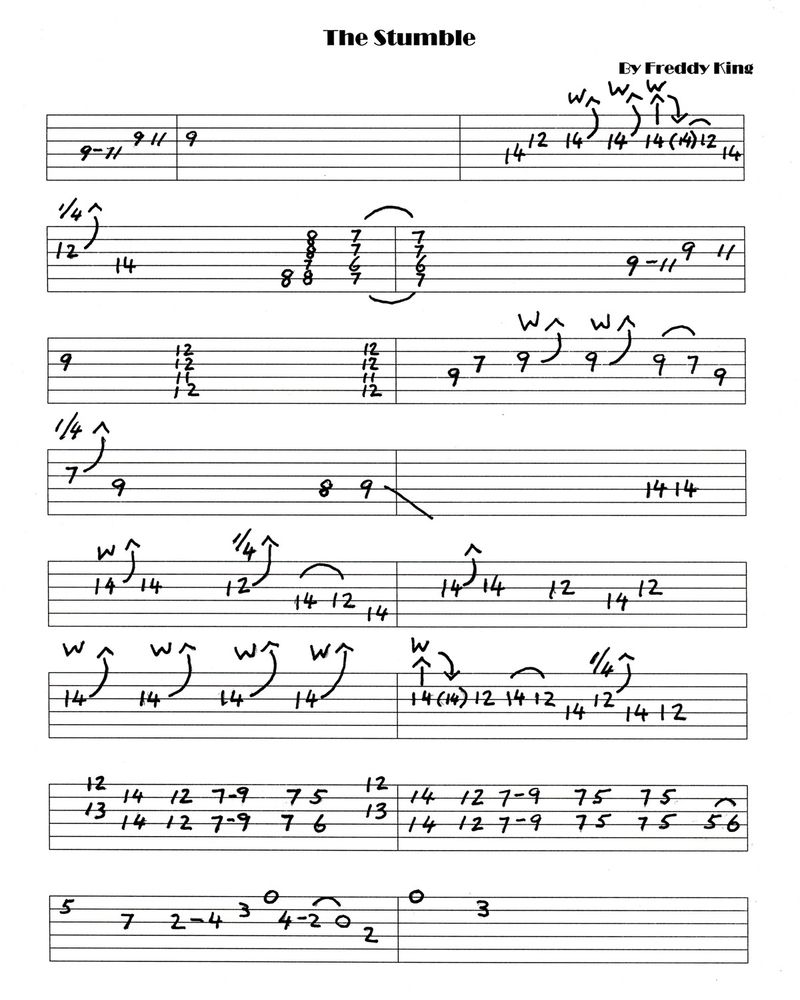
    The biggest challenge to nailing the tune is in the turnaround lick. It has a fairly long, repeated sequence of double-stop sixths. Some people play it exclusively on the high E and G strings, but I find that there is too much movement up and down the neck for accuracy. My version offers an alternative, putting the majority of the run on the B and D strings. Still, there is plenty of ground to cover, and I feel a Gibson guitar’s shorter scale is an advantage. Freddy probably recorded it on a ‘50s Les Paul Gold Top, which you can see in the picture above.

    I tend to play higher up the neck at times to get a fatter tone from the thicker, lower strings. Also, with so much movement in this lick, it’s helpful to be working the higher and hence closer together frets. There is one difference between the way I play the main lick and the original version. I’ve included the original in the tab (below), but in the video I play the repeat of the bottom end of the run with a flat 3 and flat 5 – it adds a bluesy-ness to the sound that I really like.

    The Stumble

    In the improvisational sections, I play a combination of ideas of my own along with some Freddy King stuff that I really like. An example would be 4 – b5 – 5 repeated lick of Freddy’s (1:15), and the classic double stops (1:18). I expand on the diminished chord in measure twelve (1:55) using a simple change from Hendrix’s “My Friend” – fits perfectly! Otherwise, there is quite a bit of free form riffing out, which is pretty much expected on this showcase piece. For an example of a super hot one see Gary Moore.

    The changes are below. Note that it is a sixteen bar form, not a twelve. This is often referred to as a more Gospel influenced progression, and the use of the circle of fifths at the end underscores this.

    A7          A7          E7           E7

    A7          A7          B7          B7

    E7           E7           A7          Bb dim 7

    E7 – C#7 – F#7 – B7 – E7 – A7 – E7 – B7

  • Hubert-Sumlin

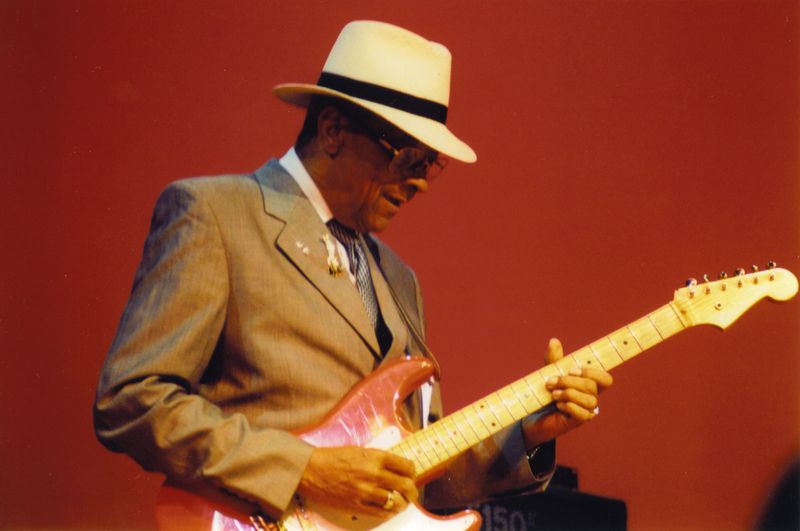
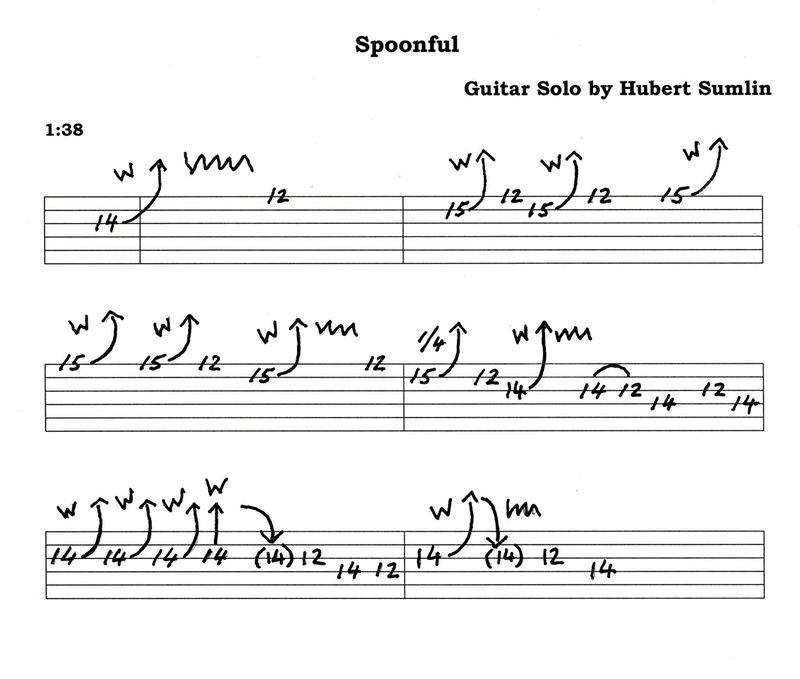
    Hubert Sumlin played on all of Howling Wolf’s sides from the mid-fifties to the early sixties and beyond. He’s known for his ‘crazy,’ ‘unpredictable’ style, which includes sharp upwards slides, squawking staccato double stops and chords, and off kilter yet memorable signature licks and fills. But he was also an early master of one of the hardest moves in rock and blues guitar playing: the whole step bend with vibrato sustaining the note at the end, sometimes called a “shake.” Let’s take a look at one of Sumlin’s most well-known solos, from “Spoonful,” where we can see how he employs that shake.

    Learning how to do the shake is pretty straightforward, but it takes strength, coordination and a good ear to get it right. Essentially, you have to bend the note up a whole step, using your third finger with the middle and index fingers on the same string behind it for support. You then hold the note out and add vibrato for that big, vocal effect.


    Listen to the solo and take a look at the video and tab. The solo is only about ten seconds long but it’s packed with bends and vibrato. You will need to be able to control the release of your bends, meaning, if there is no release mark (the downward, curving arrow), the note ends at its peak. I recorded the solo at tempo, slower, and then I demonstrate an exercise that you can do to help develop the technique.

    Hubert Sumlin Spoonful Solo

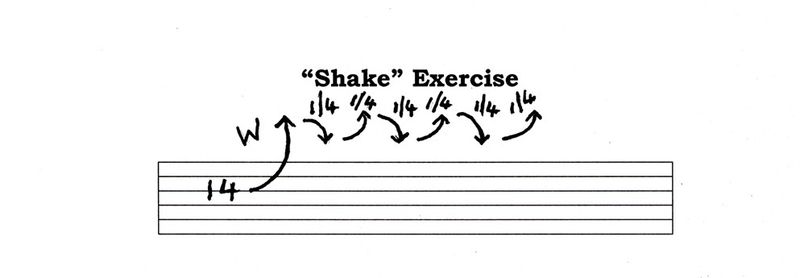
    In the exercise (below), bend the note up a whole step as described above, using your index and middle fingers to back up the third finger. Make sure the note is perfectly in tune by matching pitch with the note two frets above the original note. OK, start again. Now, do this very slowly. With the note bent up a whole step (A to B on the G string, in the example), release the note downward one quarter tone while still pressing and then bring it back up to pitch. Repeat this as long as the note sustains.

    Shake Exercise

    All of the bends in the tab and the exercise are done with the third finger. Break the solo up into pieces and practice them separately. The first lick is the best for practicing the shake, but make sure to apply the Shake Exercise to the B string shake in measure three. Watch the whole step pre-bend and release at the fourteenth fret in measure five.  It’s crucial to use a pre-bend here to avoid falling behind for the last notes of the solo. Most of the licks from the solo turn up as fills during the rest of the song. See if you can figure them out, and add them in when you play along. 

    It’s a really good idea to try to imitate the sound of specific guitar players’ vibratos. In my case, the two that I most remember trying to cop were Hendrix, especially a complex bend-release-bend-shake that he does at the beginning of the Isle of Wight live album, and Clapton’s numerous vibratos and bends in Cream’s epic version of “Spoonful.” I guess you could say I’ve come full circle at this point.

  • Mozart Psychedelic Pic

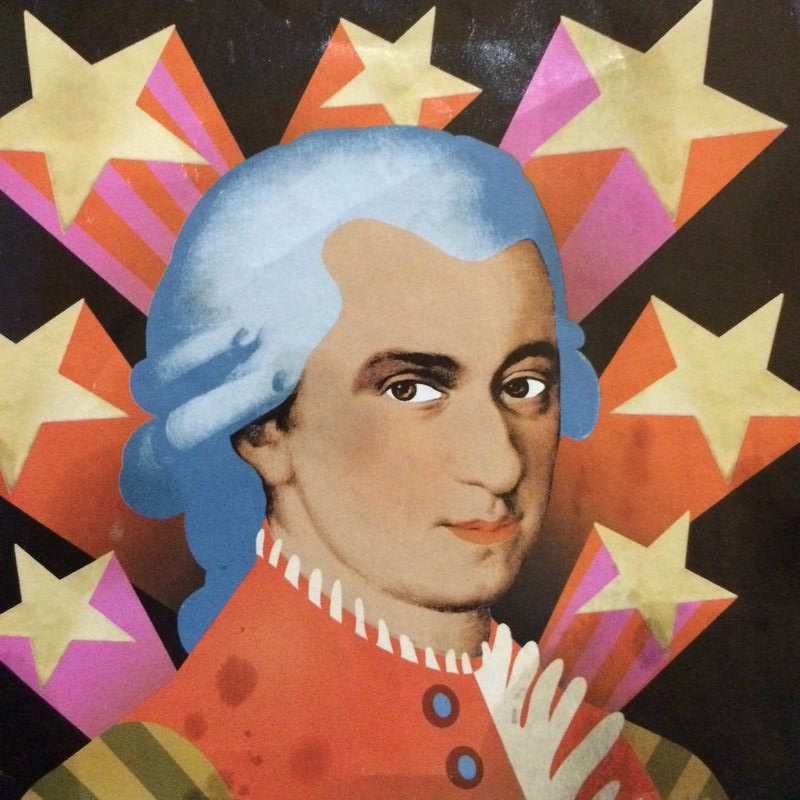
    Wolfgang Amadeus Mozart was born two hundred and sixty years ago today. Happy Birthday Wolfgang! On Mozart’s birthday, which is also the birthday of my good friend Yvonne (makes it easy to remember!), I always play a number of his works.

    Listening to Mozart is a great way to ease yourself into a hectic day. Today, I was playing a CD of his string quartets, which includes the String Quartet K. 465 in C Major, known as the “Dissonance” because of the unusual way that the piece begins. Towards the end of the disc, I was getting ready to make a video for a blues article I’m working on, and I decided to shoot a quick screen test. I grabbed the guitar and went to play whatever but suddenly, I started playing along to Mozart.


    You may notice a picture of Howlin’ Wolf in the corner and that’s where I started but I guess Mozart’s spirit was a little bit stronger at that moment. I hope you will join me in digging some Mozart today. He only lived for thirty-five years but boy did he live. He put about three normal lifetimes in there, and composed a ton of great music. One of my favorites is his Piano Concerto No. 20 in D minor – it was a favorite of Beethoven, too – can you imagine Beethoven playing Mozart? Well, you can hear it for yourself because old Ludwig wrote the cadenza used in this performance. That's Mitsuko Uchida conducting and playing. Today must be my lucky day because I've never seen this video before. Another favorite of mine is his Piano Trio in Bb Major K. 502, a piece which a music history professor once gifted to me as an analysis assignment.

    If you’ve seen the excellent movie Amadeus enough times and you’re looking to try something different, Ingmar Bergman did a delightful job on a film opera version of The Magic Flute, Mozart’s final opera. Hey, if you wanted to be remembered, would you just go out and compose the most performed opera of all time? All in a day’s work, for Mozart. Happy Birthday!

  • Blizzard 012316

    News Dispatch

    The Gram Parsons-themed band Sleepless Nights was planning to start laying down basic tracks on Saturday January 23rd for their upcoming release but fate intervened in the form of a historic blizzard. Guitarist Christian Botta was planning to brave the predicted thirty inches of snow and head over to vocalist and pedal steel player Ron Raymond’s home studio in the Lower East Side of Manhattan but he was warned not to go by many concerned parties.

    “I thought maybe the worst thing that could happen was I’d be buried alive in a snow drift like Blind Lemon Jefferson,” he said, adding that “cooler heads prevailed.” The recording is scheduled to commence next week. Songs that are on the short list include “Sin City,” a Burritos original written by Chris Hillman and Gram Parsons; “You’re Still On My Mind,” a tune made famous by George Jones that Gram recorded with the Byrds in 1968; “Sweetest Waste of Time,” a duet written by Kasey Chambers and Shane Nicholson that will feature Ron and vocalist/guitarist Ellen Croteau; and “Dead Flowers,” by the Rolling Stones.

    C_E_R_Hifi_1-10-16

    Chris, Ellen and Ron at the HiFi Bar                                                                                                                                       Photo by Edie Nadelhaft

    Ellen recently made her debut with Sleepless Nights at the HiFi Bar on Avenue A in the East Village on January 10th. The set included the songs mentioned above, minus “Dead Flowers” but plus “Wild Horses” and “The Singer Not The Song,” an older Stones tune from the Andrew Loog Oldham days. Chris said, "It was a great experience for me, lots of fun. I don’t get to play acoustic guitar live that much, and sitting there with one and singing three-part harmony made me feel like I was in CSN. Ellen did a great job coming in and learning all that material so fast. She’s our Emmy Lou, even if we don’t have a Gram or Chris Hillman. We do have a King Bee, though."

    Liam Webster Colin Poellot

    Colin Poellot and Liam Webster of the Sunday Sessions House Band

    It was a happy occasion with the usual suspects that play the HiFi Bar Sunday Sessions showcase, including the house band, with Barbara Lynn Cantone, lead vocals, Liam Webster, guitar, Colin Poellot, accordion, and Daniel Geoghegan, drums, and soul/jazz singer Katie Pipkin featured as the headliner. But there was an element of profound sadness that no one knew about, or perhaps more aptly, a silent tribute in song, if that’s possible, when Barry Komitor performed “Space Odyssey” to the highly appreciative crowd. No one knew at the time that David Bowie had in fact died that very day. It was a little spooky, after the fact, although it’s certain that those in attendance were glad to have had that moment, however unaware they were at the time.  

  • Bowie Twelve String

    “Why are you always carrying around a David Bowie album?” A drag queen at a club I was working at circa 1982 asked me this question when I was in the midst of my David Bowie phase. I guess like many kids, I thought that he was super cool. But I loved his music, which spoke to me through its incredibly original lyrics. I was playing “Suffragette City,” “Hang On to Yourself,” and “Rebel Rebel” in a cover band. For me, those songs stood in for punk, which I never fully embraced. The punk movement wasn’t easy for me, being a blues rocker, and Bowie was like a guiding light during this rudderless time when I was studying classical music without really knowing why. Iggy Pop was a more direct recipient of Bowie’s guidance as he describes in the article, “Iggy Pop on David Bowie.” My Iggy phase would come later…

    Bowie Iggy Lou

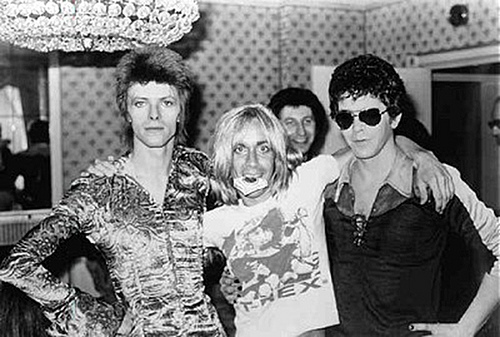
    This pic of Bowie, Iggy and Lou is just too hard to resist. You even get Bolan on Iggy's Tee!

    What I’ve come to realize about a lot of Bowie’s music is that it’s about people, and connecting. An example is his album Aladdin Sane, one of my favorites. It seems to be a kind of concept album about the people who were around him at that moment. A quick rundown of the tracks reveals that they are all about people or connection. Each song has a city or cities next to it on the track listing, and I assume that’s where each relationship was centered. I don’t purport to know who all the people are but if you have any ideas, please let me know!

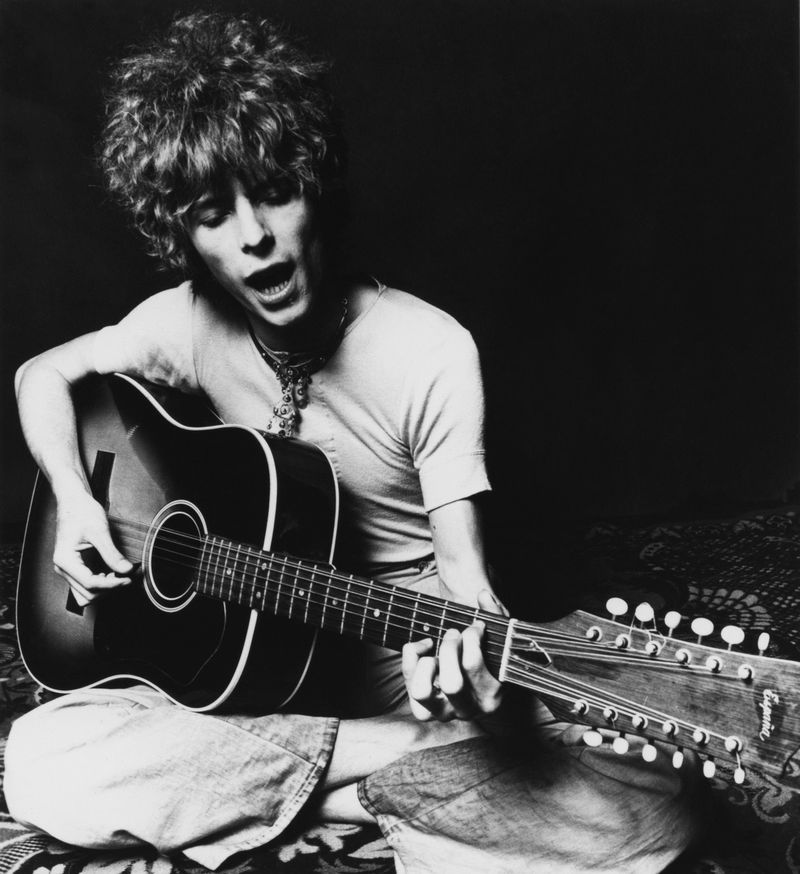
    The album that I’ve been listening to consistently over the past four or five years is Station to Station. It’s also a real guitar album, despite its disco leanings, with Carlos Alomar and Earl Slick’s contrasting styles combining forcefully. Bowie himself was an accomplished guitarist, his specialty the acoustic twelve string, which is all over his early albums. A friend of mine once described Bowie’s acoustic playing as having, “the magic right hand.” I can hear it, and I wonder if he was influenced by the Who’s Tommy, in which Pete Townsend’s acoustic guitar drives many of the songs.  

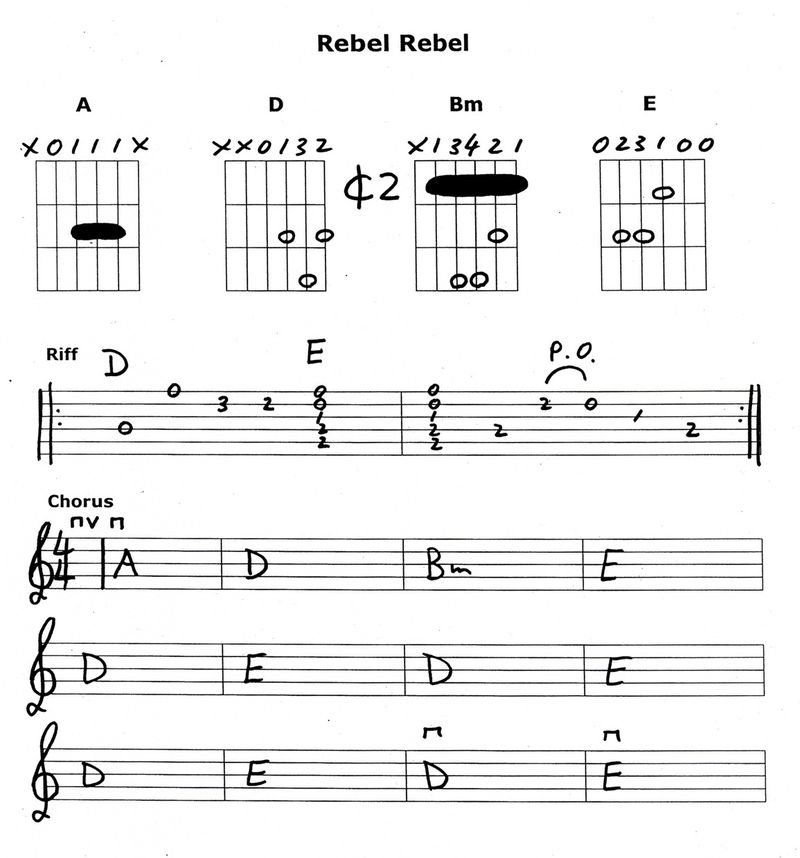
    It’s a little difficult for me to speak about Bowie right now. I’m still processing his death and life and my attachment to him, as we all are. I thought I would share this tab that I did for “Rebel Rebel” as an offering. Music is one of the greatest therapies, especially playing and singing. If you have any questions about the tab, drop me a line. But here are some suggestions, just in case:

    Use only the first three fingers of your left hand to play the riff. All the notes can be played with the numbered fingers, 1 = index, 2 = middle, 3 = ring at each fret, ie first fret notes, use index finger, second fret notes, use middle finger, etc., except for the B string note at the second fret in the second measure, use your third finger for that one. During the chorus (or pre-chorus/chorus, if you insist), use a chugging down-stroke strum, or the fast down up motion that begins the section can be used to play each chord as a sustained power chord. A combination of these techniques will work as well. Most importantly, listen to the original version of the song and turn up your guitar!

    Rebel Rebel

  • Chris at Wild Horse Blues Jam 121615

    Cranking it up at the Wild Horse Tavern 

    The week leading up to New Year’s saw lots of music being made and I feel that 2016 will bring even more of the same. I always look forward to the upcoming year with great optimism. Now that it’s here, I hope everyone had a great NYE and I wish you all the love, fun and success that’s possible in 2016. And of course, great music!

    On Monday night I paid a visit to Big Ed’s Blues Jam at the Red Lion on Bleecker Street. There were a lot of familiar faces except for Ed, who had the flu. I hear he is back in action so that’s great news. I made the hit with my partner in crime Ron Raymond, the King Bee. We got up there and knocked out a couple of speedy songs – him singing a high energy, 12 Bar version of “Tush” by ZZ Top and my usual favorite, “Going Down to Main Street” by Muddy – in retrospect I should have followed with a slow song.

    The next night Ron and I rehearsed for our upcoming gig with Sleepless Nights at the HiFi Bar at 169 Avenue A. We go on at around 8pm on Sunday night, January 10th. We have a great new female singer who is going to be performing with us – Ellen Croteau will take on the role of Emmy Lou Harris in our Gram Parsons-themed band. We are all very excited and we hope you can make it!


    The second to last night of the year found us at the Wild Horse Tavern Blues Jam, which is led by Jonathan Kalb. I got up for a couple of numbers, including a well-received “Sad To Be Lonesome,” by Sonny Boy Williamson. But the King Bee was a veritable mainstay, playing bass on about six numbers and singing his signature song. Bluesy Dan Berliner, who provided the video, played a tasty solo on that one, as well.

    Most of these songs are in the video, although I only make a guest appearance in the beginning as a networking ‘man in the crowd.’ Note the awesome picture of Janis Joplin in the background. And speaking of bottles of bourbon, I finally met Jim Beam, an awesome harp player. He appears in several songs.

    First song on the video, which sounds like “Let It Rock,” has an interesting element for a blues jam, clarinetist Ric Frank. Being that it was the holidays, it got a little crowded up there and there were complaints that it was a little too loud. Local favorite vocalist Dave Rudbarg sang a tasty “Kansas City.”

    The final number on the video and a highlight of the evening was guitarist Joe Berger’s virtuoso take on Freddy King’s “Going Down,” which was fueled by fine vocals from Meredith Manna. Mr. Berger definitely plays to the back rows. The groove got a kick in the pants from the addition of Michael Fox on drums, who also played a muscular, John Bonham-esque flourish at the end. 

    I encourage all of you to come down to these jams, play and have a good time. See you in 2016!

  • Janis Joplin Stamps and Tix2

    One of the aspects of the documentary, Amy, the story of Amy Winehouse that struck me immediately was what a solid guitar player she was. Why is this notable? Because I had never heard anything about her musicianship. Outside of her songs themselves, what so many of us saw was her bad girl image, as exemplified by her song, “Rehab.” Yet there she was, accompanying herself on jazzy originals and moving comfortably all around the fretboard.

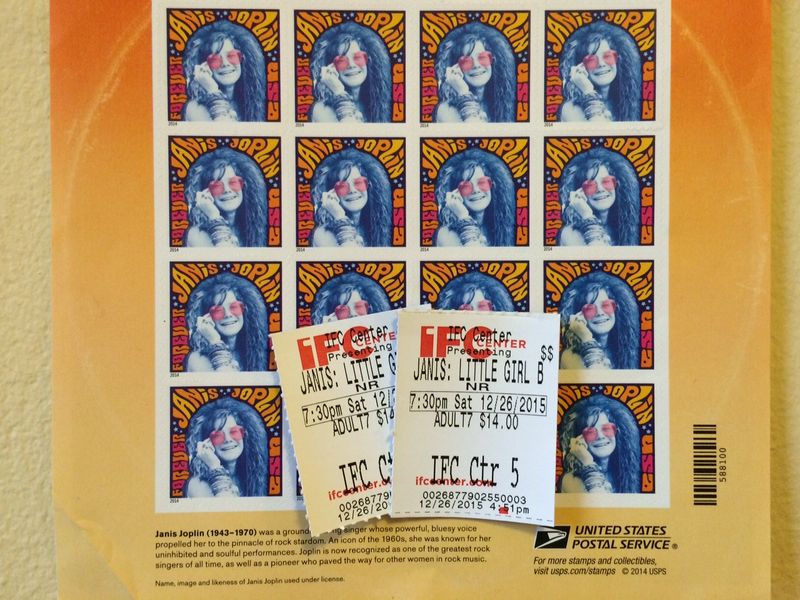
    I knew then that I would blog about the movie – and now that I’ve seen Janis: Little Girl Blue, the time is right. Both of these films are good and serve an important purpose, which is to show the stories behind the wild images of these great singers who shared influences, strengths, and weaknesses, as well.

    Amy has more of a point of view than Janis. Throughout her brief and tragic career, a number of men, including her father, her Pete Doherty worshipping boyfriend, and her managers and producers did little but ride the Winehouse gravy train until there was nothing left. The movie makes this clear but fails to ask the question, in an eight year career, why did she only release two albums? It left me wondering why no one, including Winehouse herself, was compelled to ask the question of why they didn’t work a little harder instead of milking the hits for all they were worth. It suggests another question – what is the work ethic of the music industry today? Is promotion more important than quality? With Amy Winehouse, the quality is obviously there. But she could have done so much more. Working harder might have saved her life.

    Amy Winehouse Guitar

    Little Girl Blue is a simpler movie, more or less a valentine to a legendary performer whose memory is in danger of fading. The purpose of the film seems to be to expose the younger generation to Janis’ music and life while potentially opening up a discussion of who she was and what happened to her. In direct contrast to Amy Winehouse, Janis Joplin had no consistent collaborators or managers who could help her with her life or her musical direction. A force of nature, Joplin flashed through the landscape of the late sixties, a huge star but seemingly not much of a priority for her handlers, who included Albert Grossman, Bob Dylan’s manager, and Clive Davis, the Columbia Records president.

    In a scene taken from the movie Festival Express, Janis sings and plays her soon to be biggest hit, “Me and Bobby McGee,” while members of the Grateful Dead and others join in. The irony of the situation and a question that the movie flirts with trying to answer is if Joplin had finally gained the center of attention, why did she continue to feel so much pain and loneliness?

    I saw Little Girl Blue on perhaps the smallest movie screen known to man, in cinema number five at the IFC Center in Manhattan. But Janis had no trouble filling the theatre and the hearts of the audience, even from that tiny screen. I was reminded of a quote from Sunset Boulevard and its tragic, lacerating star, Norma Desmond: “I am big – it’s the pictures that got small.”

    Janis Joplin would never need to make this claim. She died accidentally with her greatest success in the can, and the opportunity to continue working with better and better musicians ahead of her. Sadly, her cautionary tale is wasted on Amy Winehouse. But the biggest tragedy is that Amy and her hangers on had five years to think about it.

  • Christmas Strat

    Merry Christmas, Happy Holidays and a Happy New Year to all of my friends, students, family and fellow musicians. It’s been a great year in many ways. There have been some ups and downs, but in the end I’m really looking forward to 2016 and enjoying the final days of 2015.

    I love Christmas and get this – I love Christmas music, too! In my first job out of college, as a guitar teacher at the Queens Village School of Music (I don’t think it exists anymore), I had a blast teaching my students Christmas songs, starting in October! That’s right, they took it seriously. The school and the parents wanted those kids to have it down by years end, and in early December, I already had Christmas songs coming out of my ears.


    I figured I would share a few of my favorite Christmas numbers with you, or at least a few that come to mind. First up is “Christmas Tears,” by Freddie King. This is a sad and lonesome Christmas song recorded in 1961, when Freddie was tearing it up with his piano-man/writing partner, Sonny Thompson.


    Next up is B.B. King’s version of “Back Door Santa.” You’ve just gotta love the title. I first heard this one when I was working at Sherry-Lehmann during the Christmas season a few years back, and it eased my Christmas Blues.


    Last but definitely not least I have to include my all-time favorite, “The Dance of the Sugarplum Fairy,” from Tchaikovsky’s Nutcracker. I’m a huge fan of Tchaikovsky, and I plan to publish an analysis of one of his symphonies I did at school during the very time I was hearing “Back Door Santa” at S-L, when I was in grad school at City College. That was a mad Christmas season! This is a slightly slower version of 'Sugar Plum' than I'm used to, but the dancing is wonderful. And nobody takes a bow better than ballet dancers. 

    I hope you enjoy these, and have a great holiday season! I look forward to seeing everyone again in 2016!